Definition
Osmoregulation is the control of water potential and solute concentration (level) in the blood to maintain a constant water potential in the body #BiologyDefinitions
- WP of blood in the body has to be kept relatively constant
- Drastic changes in the water potential of the blood can result in serious problems
- If Blood Plasma becomes too diluted → water will enter Blood cells → osmosis
- Blood cells will swell and possibly burst
If blood plasma becomes too concentrated → water will move out of the cells by osmosis Blood and tissue cells → will become dehydrated and shrink → they will not be able to carry out their metabolic functions properly → severe cases may be fatal
WP of blood → depends on amount of water and mineral salts in blood plasma. Amount of water in blood plasma → controlled by antidiuretics hormone (ADH) → secreted by posterior pituitary gland. ADH produced ⇒ by a region of the brain called the hypothalamus. ⇒ released by pituitary gland and increases water reabsorption in the nephrons.
Important
ADH → produced by hypothalamus ADH → secreted by pituitary gland
How do Kidneys help to regulate WP of Blood
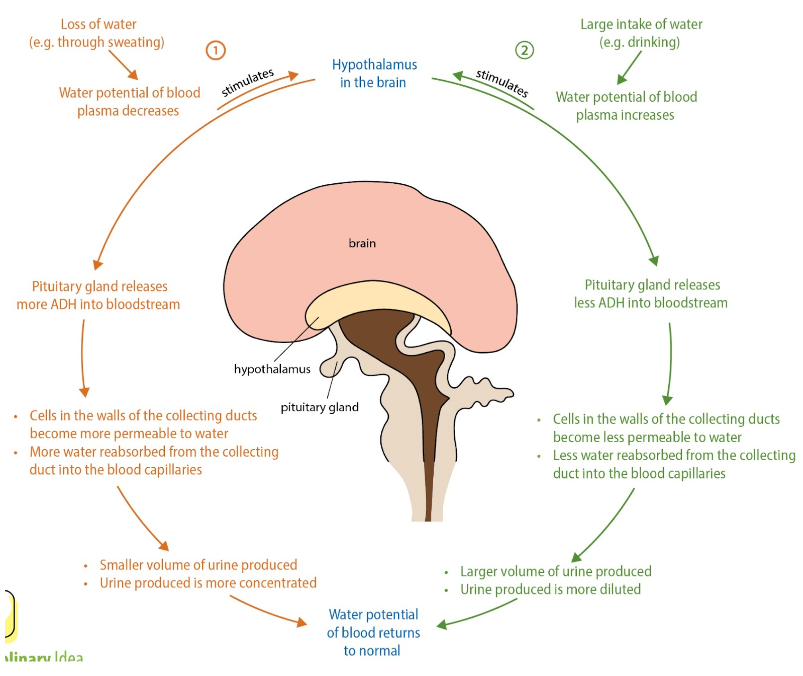 MEMORISE!