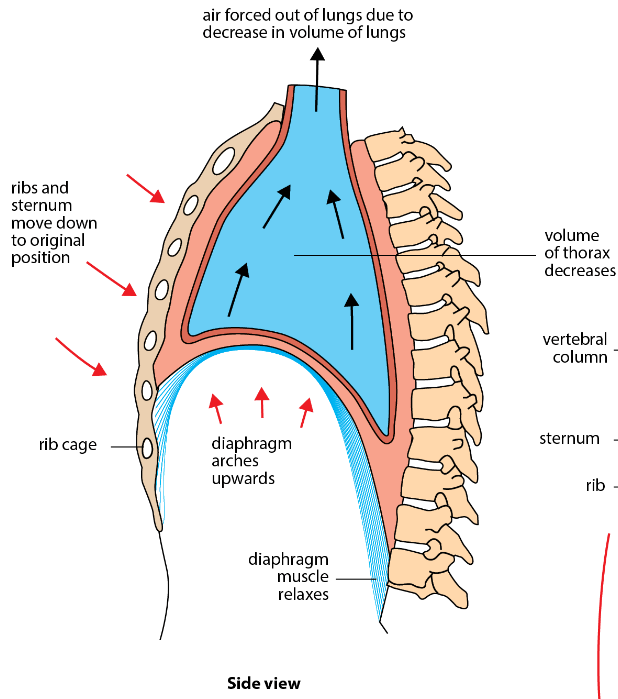
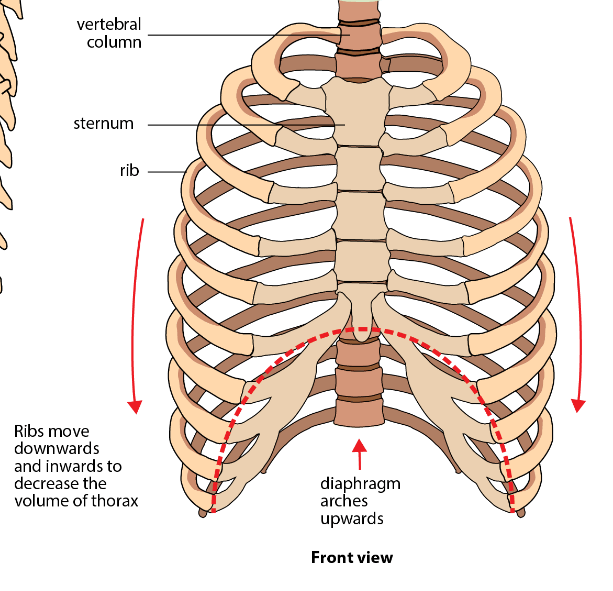
- Internal intercostal muscles contract while external intercostal muscles relax
- diaphragm relaxes and diaphragm arches upwards
- ribs move downwards and inwards. sternum moves down to its original position.
- volume of thoracic cavity decreases.
- lungs are compressed and air pressure inside them increases as volume decreases.
- pressure within lungs is greater than that of atmospheric pressure. air is forced out of your lungs to the exterior environment until pressure on both ends is equal.
For graphs, when there is a spike in the pressure of the lungs, it means that you are breathing out AT THAT POINT, because air pressure is only higher when you start to start breath out.