One way to protect ourselves from diseases → such as influenza and pneumococcal disease → receiving a vaccine.
Definition
Vaccine contains an agent → that resembles a pathogen and prevents infectious diseases by stimulating white blood cells to quickly reproduce antibodies when pathogen invades
How Vaccines Work
Definition
Antigens: Substances that can trigger the production of antibodies
- when foreign particles → such as pathogens → enter our bloodstream → the antigens on the surface of pathogen stimulate WBC → produce antibodies against them.
- Proteins on surfaces of pathogens → such as bacteria, viruses → are examples of antigens.
Note
the agent is the antigen!
copy paste this to answer vaccine related questions! When vaccine → which contains agent that resembles a pathogen (antigen) → enters body → it simulates WBC → produce antibodies → which will destroy the pathogens that cause the infectious disease.
- antibodies → are proteins that are produced to destroy a pathogen.
- they are specific in action
- antibodies → that destroy 1 type of protein will be ineffective against another type.
- Antibodies can also tag a pathogen for destruction by WBC
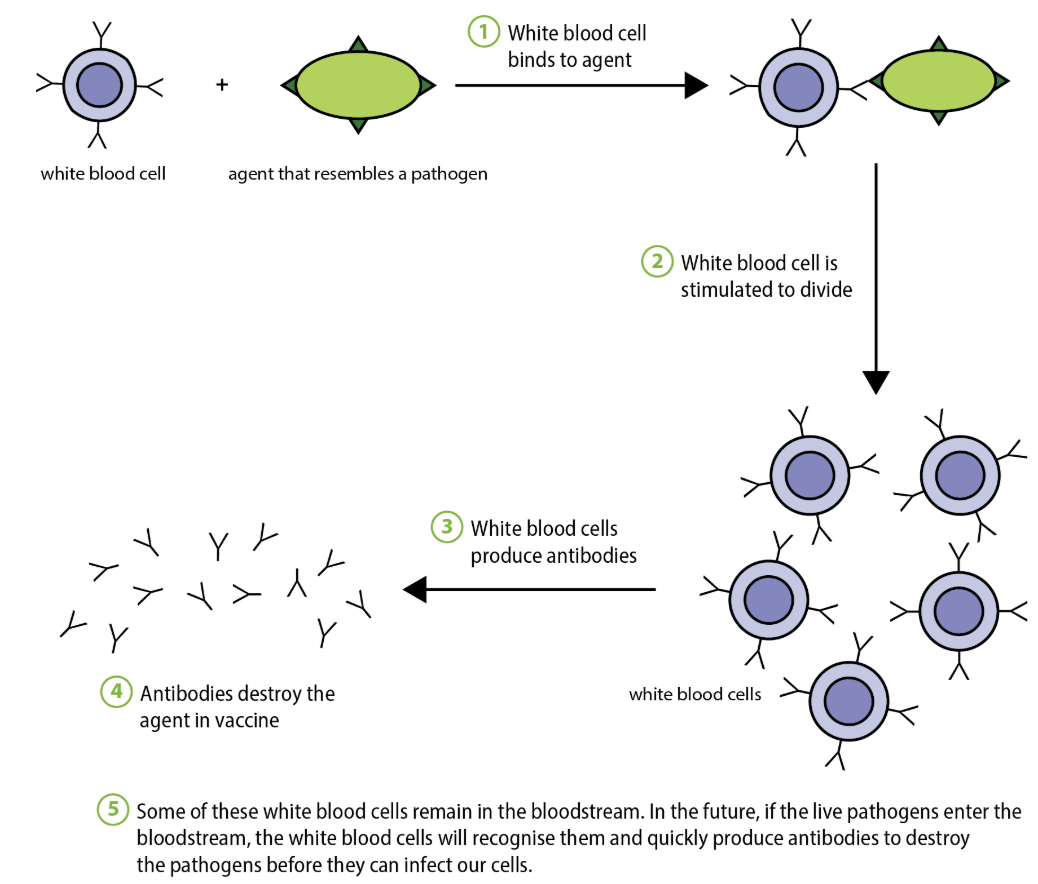
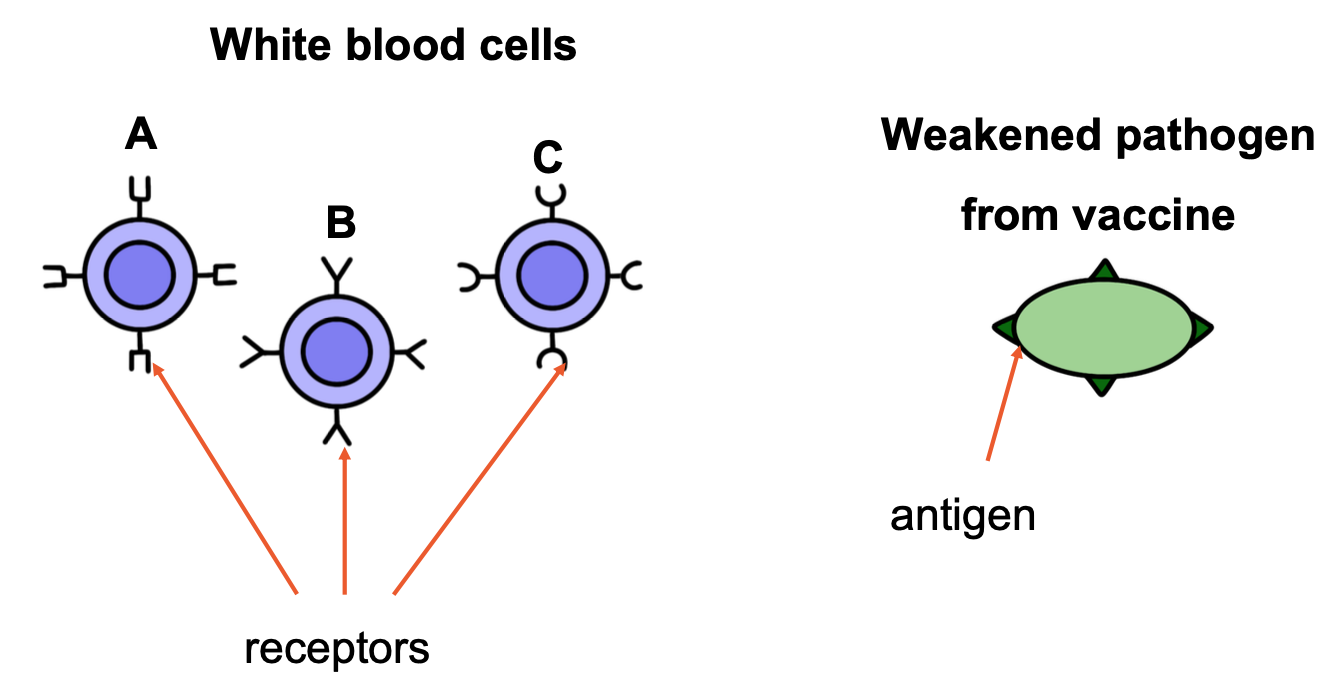
- White blood cells bind to antigens on pathogen
- White blood cell is stimulated to divide → create copies of themselves
- Many antibodies produced by copies of WBC
- Antibodies help destroy pathogen.
→ some white blood cells → remain in blood stream for a long time → as memory cells. → In future, when same pathogen enters the body → memory cells can recognise and produce the same antibodies to destroy it.
Important
- must state that antibodies DESTROY, not just FIGHT.
Note
Suggest why there are still cases of pneumococcal disease even after introduction of vaccine
- Vaccine may not cover all diff. types of strains of pneumococcal disease
- not ever child vaccinated
- not every child is suitable to vaccine
- not every child’s body responded to vaccine
→ don’t write mutation