Structure of Bacterial Cell
singular of bacteria → Bacterium*
- single celled organism
- Bacterial cell → does not have membrane bound nucleus (freely moving/ attached)
- Singular circular DNA → as its genetic material
- Bacterial cell also has
- Cell wall
- Ribosomes
- Small circular DNA molecules → plasmids → may have 1 or more flagella (singular: flagellum)
- Some Bacteria → are pathogenic (disease causing) → others are non pathogenic (non-disease causing)
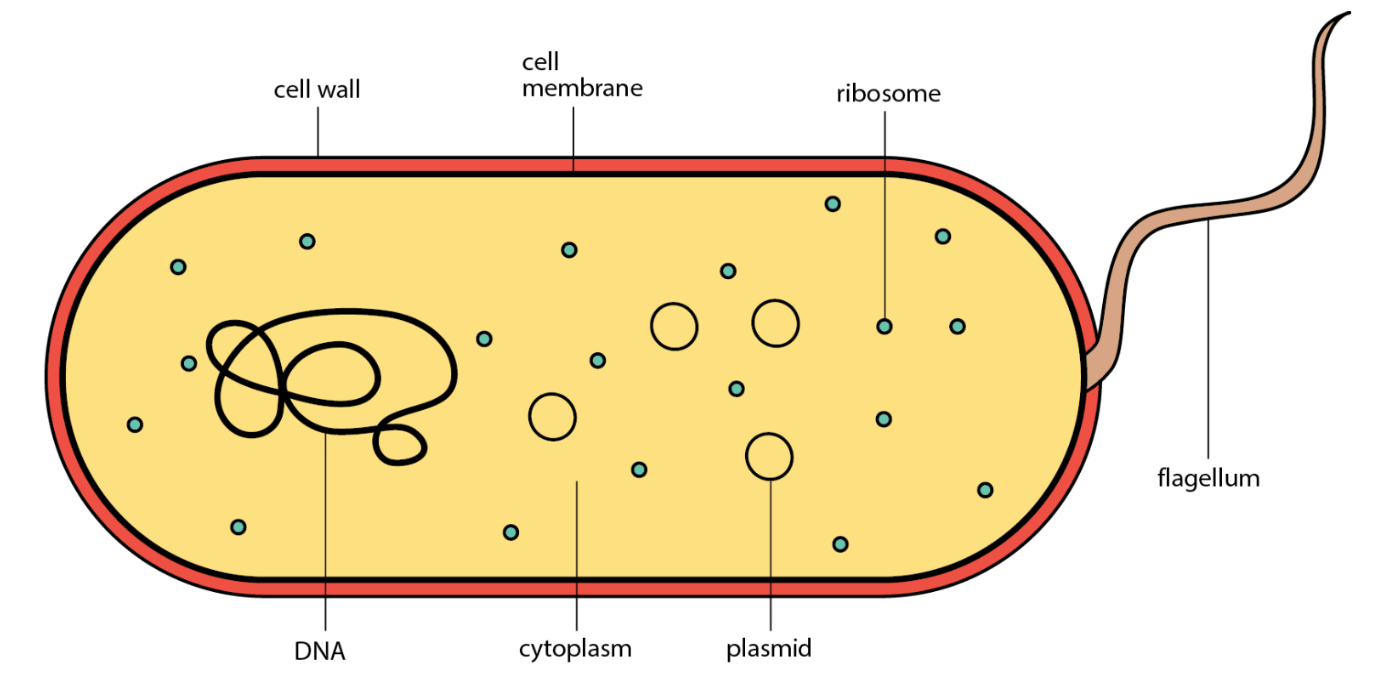
Note: Bacteria cell doesn’t have nucleus → but still contains genetic material → could be freely lying/ attached
Important
- not all bacteria cells have plasmids
Structure of Virus
Typical virus → has protein coat → enclosing genetic material → either DNA/RNA.
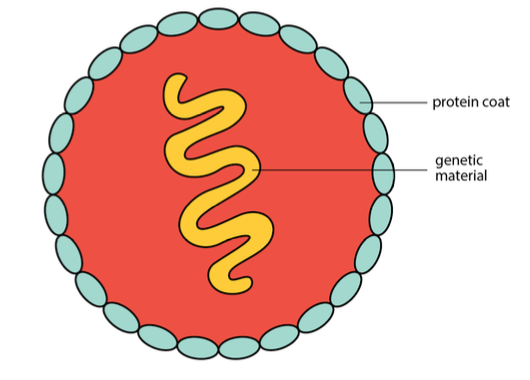
Virus → has both living and non living characteristics.
- Virus does not have cellular structures → such as cell membrane, cytoplasm, or organelles.
- Unlike living things → it does not grow, move, feed, respire, excrete.
- However → it can reproduce → but only when it enters a living cell → which acts as a host
- This is because → host cell contains necessary materials → for reproduction → such as enzymes, organelles like ribosomes
Comparison
| Feature | Bacterial Cell | Virus |
|---|---|---|
| Outer Covering | Cell Wall | Protein Coat |
| Genetic Material | DNA | DNA or RNA |
| Cell Membrane | present | absent |
| Cytoplasn | present | absent |
| Ribosome | present | absent |