Transgenic bacterium can be genetically engineered to express the gene for human insulin.
| Step | Visual |
|---|---|
| 1 . Obtain the fragment (segment) of DNA in human chromosome that contains the insulin gene. (human insulin gene is isolated from human cell) Cut out the gene using restriction enzyme. This enzyme cuts the restriction site at the 2 ends of the gene to produce sticky ends (at both ends of gene) Each sticky end is a single strand sequence of DNA bases. These bases can pair with complementary bases to form a double strand. | 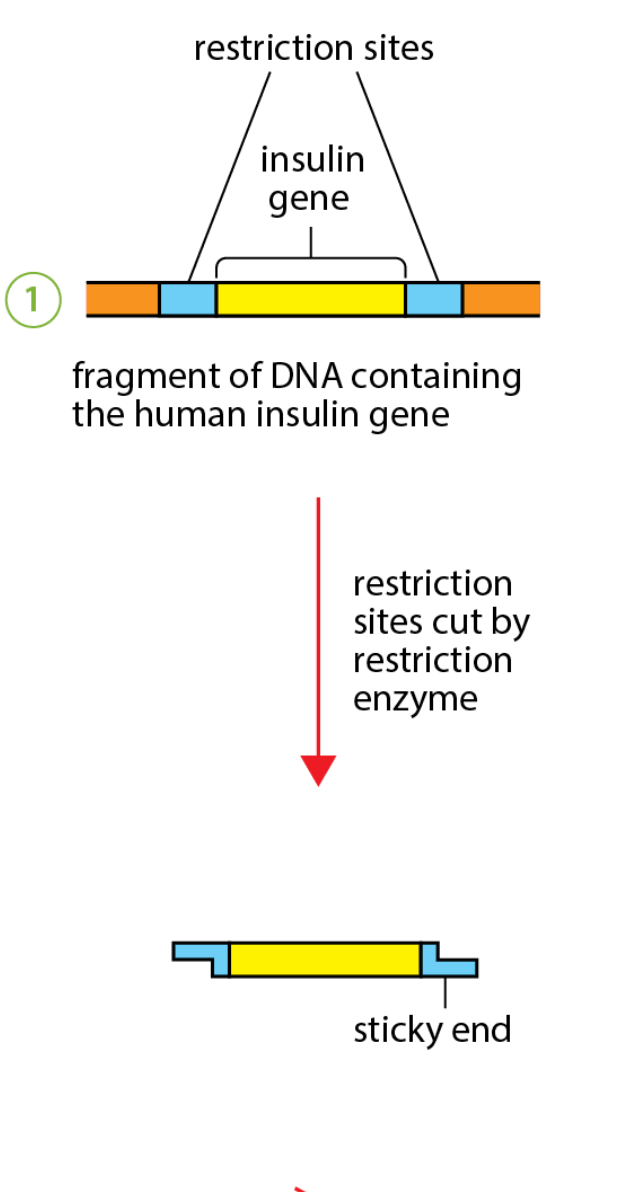 |
| 2. Plasmid is removed from Bacterium Plasmid is cut with same restriction enzyme. This produced sticky ends that are complementary to the ends of the insulin gene. | 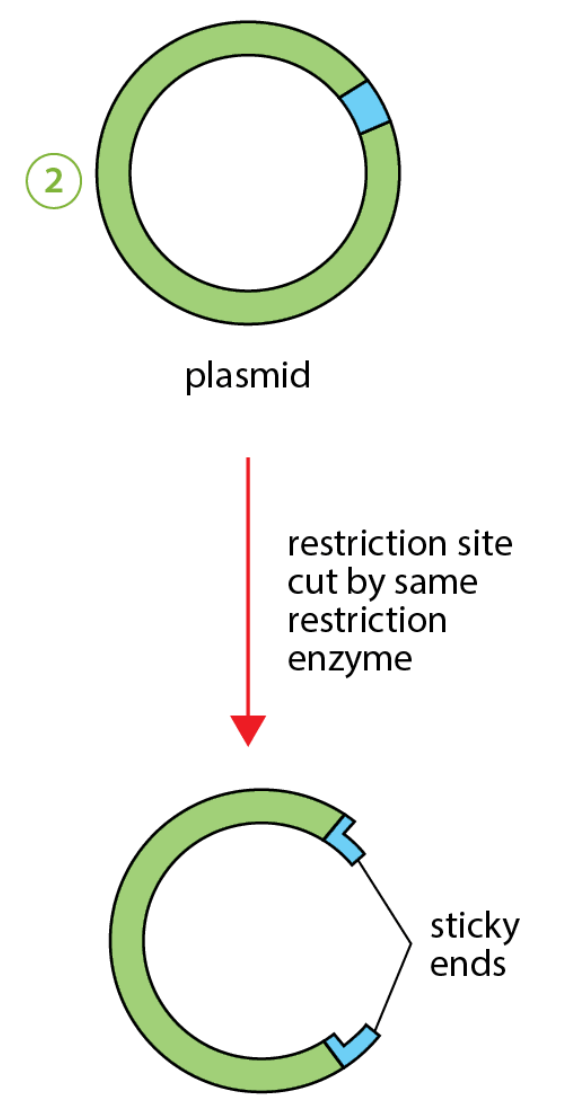 |
| 3. Mix the plasmid with the DNA fragment containing the human insulin gene. Human insulin gene will bind to the plasmid by complementary base pairing between their sticky ends. Add the enzyme DNA ligase → to seal the human insulin gene to the plasmid. This plasmid containing DNA from 2 different organisms is called recombinant plasmid | 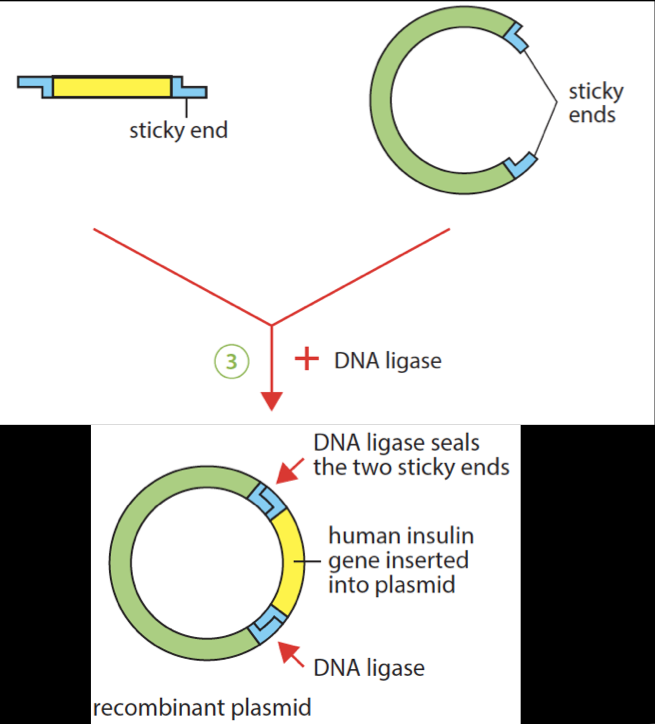 |
| 4. Mix the recombinant plasmid with Escherichia coli bacterium Apply heat or electric shock. → this opens up pores in the cell membrane of the bacterium for plasmid to enter Transgenic Bacterium is produced | 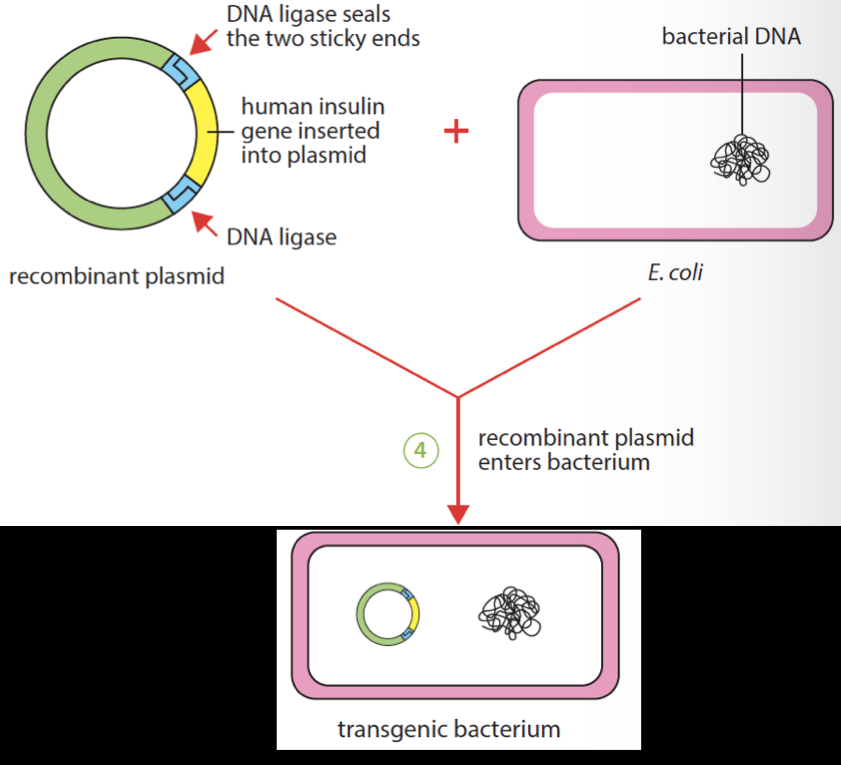 |
| 5. This transgenic bacterium will use the new gene to make insulin Such bacteria can be isolated and grown in a fermenter for mass production of human insulin. Insulin protein has to be extracted and purified before it can be used. | 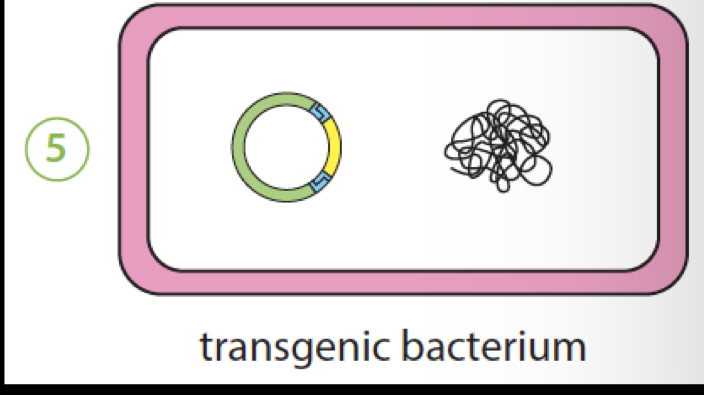 |
Note
Any organism which acquired a foreign gene is called transgenic organism Bacterium carrying human insulin gene → transgenic bacterium