Definition
Self pollination is the transfer of pollen grains from the anther to the stigma of the same flower or of a different flower on the same plant #BiologyDefinitions
Features Favouring Self Pollination
- Flowers are bisexual with anthers and stigmas → maturing at the same time
- Stigma is situated directly below the anthers
- In certain plants with bisexual flowers → some flowers never open. Only self pollination can occur
- pollen grains cant escape.
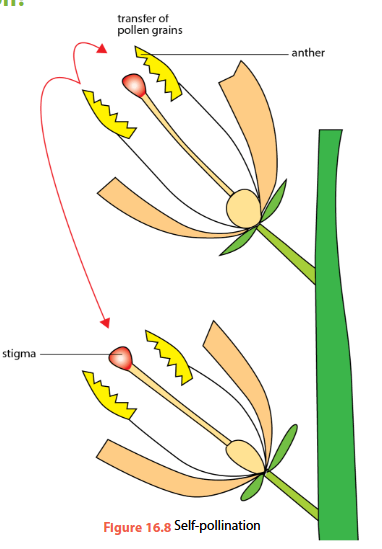
- pollen grains cant escape.
Advantages and Disadvantages
| Advantages | Disadvantages |
|---|---|
| Only 1 plant is required | Should fertilisation occur → there will be less genetic variation → in offspring → compared to cross pollination. → thus these species are less well adapted to changes in the env. |
| Offspring inherits its genes from the parent plant after fertilisation - hence beneficial qualities are likely to be passed down to the offspring | Continued self pollination → may lead to offspring becoming weaker, smaller, and less resistant to diseases. |
| Does not need to depend on external factors → such as insects / wind → for pollination. | |
| Since anthers are close to the stigmas of same flower → there is higher probability that pollination will occur as compared to cross pollination | |
| less pollen and energy are wasted in self pollination compared to cross pollination |