Example
main ingredient in sanitisers and fuel additives widely used in industry as solvent
Catalytic Addition of Steam to Ethene
- main method for industrial production of ethanol
→ produced by catalytic addition of steam to ethene.
- reaction between ethene and steam carried out at and 60atm
- Phosphoric(V)acid () acts as catalyst in reaction
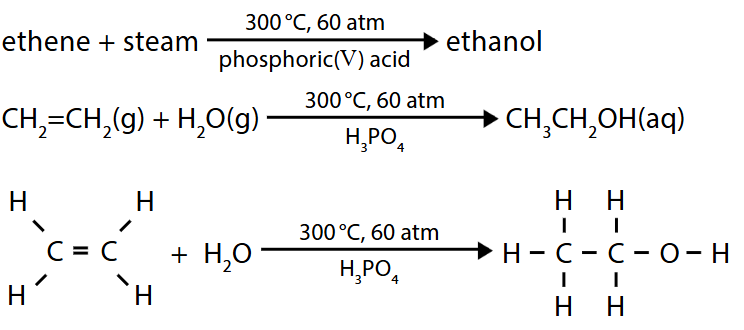
ethene required for reaction → usually obtained from refining and cracking of crude oil.
- hence this method of producing ethanol is not sustainable as it requires finite resources
Important
ethene is obtained form the cracking of large petroleum fractions
Fermentation of Glucose
Alcoholic drinks → wine and beer → contain ethanol.
-
to produce ethanol → we ferment fruits, vegetables or grains.
-
alcohol fermentation → is a process in which micro organisms such as yeast → act on carbohydrates like glucose in absence of oxygen to produce ethanol and carbon dioxide
-
in industries → fermentation takes place in fermentation tanks.
-
when fermentation is complete → yeast settles to bottom and alcohol is pumped out from the tanks.

-
this is slower reaction compared to catalytic addition of steam to ethene.
however it is more sustainable as starting materials are obtained from plants, which are considered renewable resources
Important
yeast contains enzymes which cause sugars to break down to glucose.
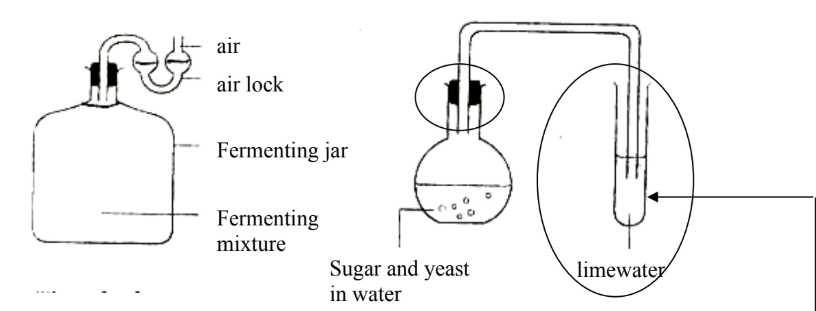
Fermentation of Glucose Solution in the School Laboratory
- glucose solution is mixed with yeast
- this mixture is kept at temp of around C
- ethanol and carbon dioxide produced after a few days.
Ideal Conditions for Fermentation
- optimum temperature of (below this temp, reaction is very slow. above this temp, enzyme will denature and fermentation stops)
- yeast prefers anaerobic conditions (absence of oxygen) → hence apparatus needs to be air right. flask is stoppered and limewater shows that carbon dioxide is given out and also prevents air from entering flask.
Fermentation of sugars produces a very dilute solution of ethanol → up to 15%
- reason is bc - when ethanol exceeds this value → yeast will die and fermentation will stop.
- pure ethanol can be obtained from this fermented mixture by fractional distillation
Note
Uses of Ethanol
constituent in alcohol beverages.
As a solvent.
despite it being a good solvent, it is very flammable. it also evaporates quickly. hence used in perfumes, colognes, after shave lotions paints and varnishes
- As a biofuel.