 fossil fuels have significant sulfur content
sulfur comes from biological molecules - in organisms that gave rise to fossil fuels - and from sulfur compounds in the rocks surrounding the fossil fuel
fossil fuels have significant sulfur content
sulfur comes from biological molecules - in organisms that gave rise to fossil fuels - and from sulfur compounds in the rocks surrounding the fossil fuel
power plants that burn fuels such as coal and fuel oil as well as waste incinerators can still produce high amounts of sulfur dioxide in their exhaust, known as flue gas
flue gas Desulfurisation can remove significant proportion of sulfur dioxide from flue gas before it is released into atmosphere
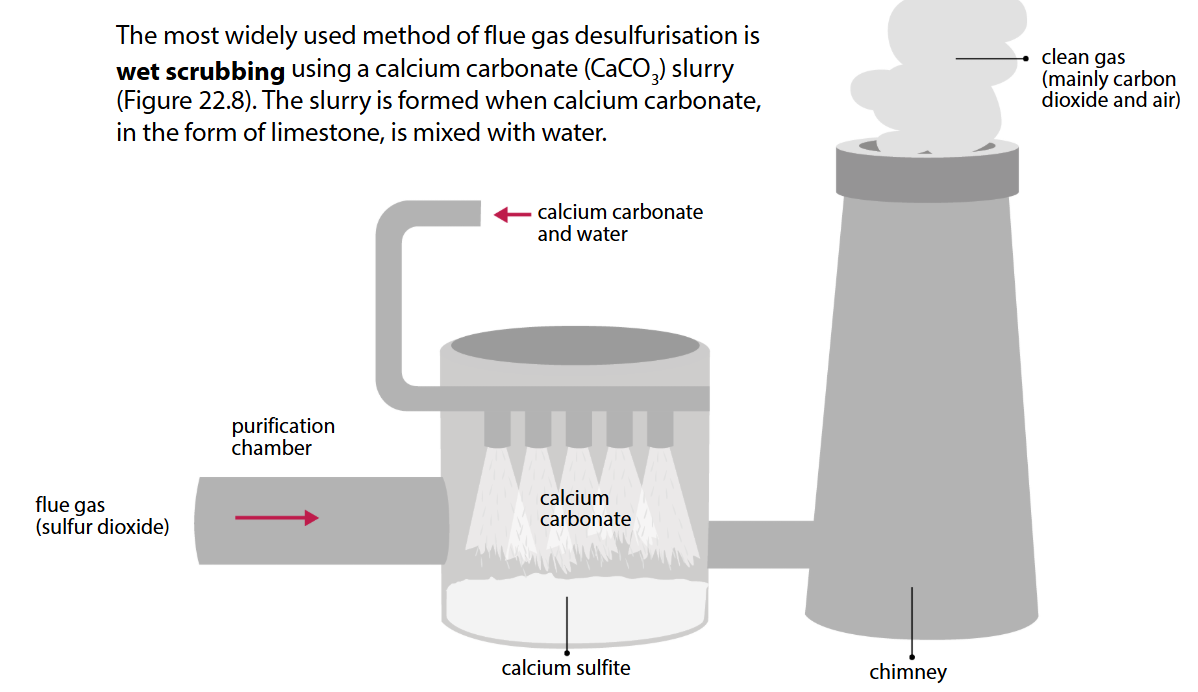
most widely used method of flue gas desulfurisation → is wet scrubbing using a calcium carbonate slurry.
- slurry is formed when calcium carbonate in the form of limestone, is mixed with water.
slurry droplets are sprayed through flue gas and calcium carbonate reacts with sulfur dioxide to form calcium sulfite and carbon dioxide gas
calcium carbonate + sulfur dioxide → calcium sulfite + carbon dioxide calcium sulfite is then further oxidised to form calcium sulfate by atmospheric oxygen
calcium sulfite + oxygen → calcium sulfate
calcium sulfate can then be hydrated to form hydrated calcium sulfate, also known as gypsum
Calcium sulfate + water → hydrated calcium sulfate
gypsum produced - used to make drywalls, fertilisers, plasters for sculptures and casts that stab9ilise fractured bones. gypsum also essential ingredient in making of tofu
Low Sulfur Fuels
- flue gas desulfurisation set ups require a large amount of space to install + can be quite costly to run
- not practical to install these set ups in vehicles
- thus important that countries enforce the use of low and ultra low sulfur fuels in vehicles
fossil fuels from certain parts of world - more sulfur than others
- excess sulfur can be removed from fossil fuels → by treating it with hydrogen gas → producing hydrogen sulfide as a by product
- allows for production of low sulfur petrol and diesel which meet the strict requirements of many developed countries
much of atmospheric pollution comes from burning of petrol and diesel in vehicle engines using low sulfur fuels - goes long way → in reducing amt of sulfur dioxide in atmosphere