Definition
Periodic trends are specific patterns in the properties of elements along periods and groups of the Periodic Table
→ periodic trends arise from changes in atomic structure of chemical elements within their respective periods and groups in the periodic table.
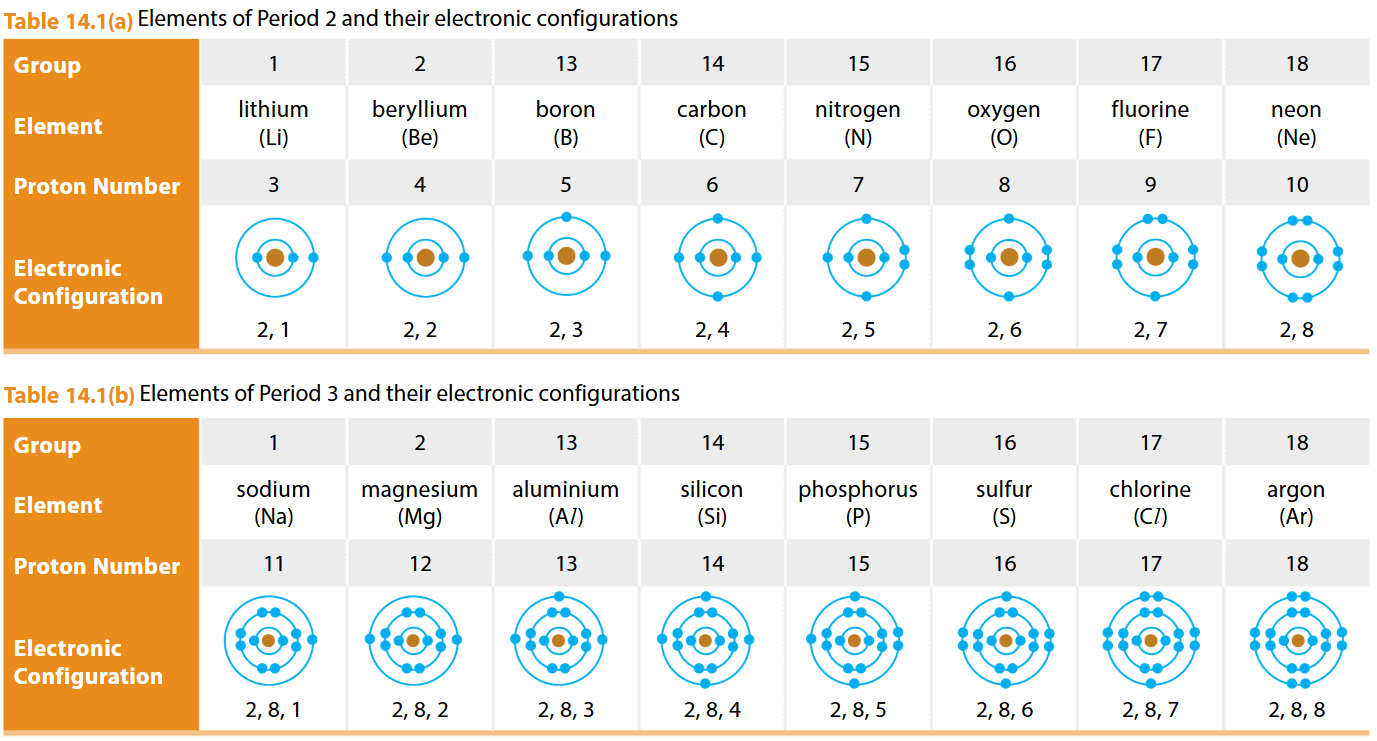
Major Periodic trends of elements → include atomic radii, ionic radius, metallic character, non-metallic character, reactivity, electronegativity.
Due to periodic trends → we can predict the unknown properties of any element.
Periodic Trends Are:
- Going Across a Period, from Left to Right → as electrons are added to the same electron shell.
- In general → size of the atom of elements become smaller (i.e. atomic radius decreases) → as number of protons in the nucleus increases.
- In general → ease of atoms losing electrons → to form positive ions decreases but ease of atoms gaining electrons → to form negative ions increases → as number of electrons in the valence shell (same number of shells) increases.
- There is decreases in → metallic properties + increases in non-metallic properties → i.e. elements change from metals to non-metals
- Going Down a Group → as total number of electrons and number of electron shells increases
- In general → size of atom of elements becomes larger (i.e. atomic radius increases)
- Ease of atoms → losing electrons to form positive ions increases but ease of atoms gaining electrons to form negative ions decreases.
- There is an increase in metallic properties + decrease in non metallic properties.
- (in some groups → elements change from non-metals to metals while in other groups, reactivity of metals increases on going down the group)
- Elements in the Same Group
- Show gradual change → in physical properties on going down the group
Understanding
elements share similar chemical properties, but physical properties like boiling/melting point changes gradually as i move down the group
Note
Note: direction of arrow indicates increasing trend