Electric current → rate of flow of charge and not charged particles. (Charged particles may have diff. amt of charges)
Definition
Conventional current is described as the direction of flow of positive charges
- it assumes that positive charges flow out of the positive terminal of battery to negative terminal
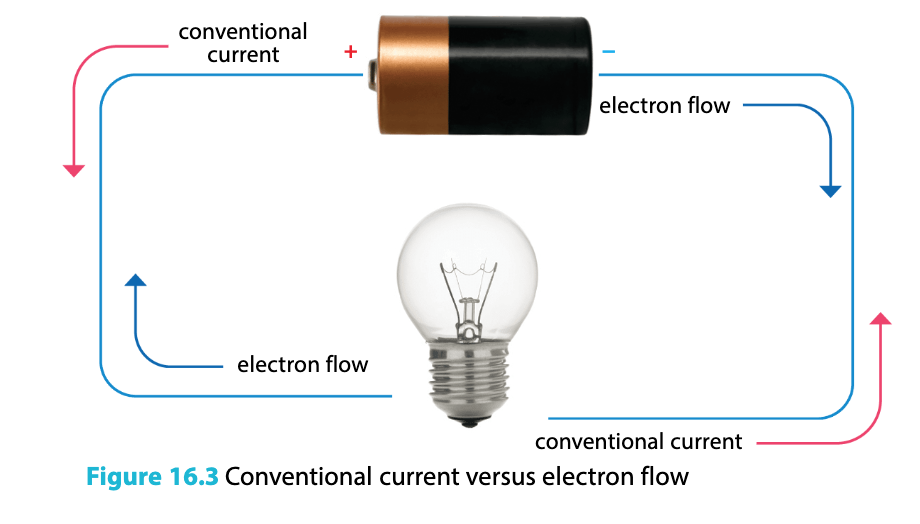
Electric circuit → is closed path → connected with metal wires → usually made from copper.
- compromises: source, (e.g. battery) and network of electrical components (e.g. light bulb)
Electric current → caused by flow of electrons.
Note
Conventional current is opposite to the flow of electrons form negative terminal of battery to the positive terminal.
Sample
when question asks to draw only ‘current’, assume it is conventional current unless specifically stated electron flow
Movement of electrons in electrical circuit = electron flow.
Note
Direction of current in circuit → is that of conventional current and not electron flow. “direction” here is NOT VECTOR direction. Electric Current = SCALAR quantity
Electric current can be measured by ammeter or digital multi meter
Important
Ammeter read to half of smallest division Reflecting surface → to check for parallax error. If you can see image of needle on this surface → there is parallax error Practical Skills For Physics
Ammeter → connected in series to an electric circuit → measure magnitude of electric current → flowing in the circuit.
- ideal ammeter has 0 RESISTANCE.