current carrying conductor in a solenoid → commonly used in electromagnets.
example of appliance that uses an electromagnet is the circuit breaker.
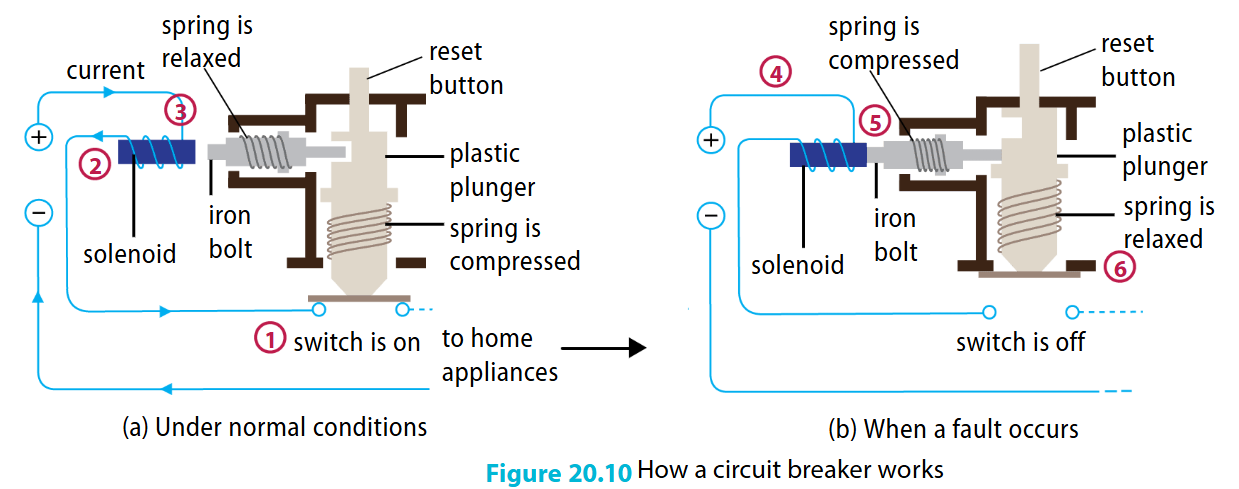 |
|---|
| 1. under normal conditions → when switch is turned on → current flows through solenoid 2. when current is below the limit → the magnetic field of the solenoid is weak and does not attract the iron bolt 3. the solenoid and iron bolt are not in contact. the current flows normally through the circuit. 4. surge in current occurs when there is a fault 5. if the surge in current exceeds the limit, the solenoid becomes an electromagnet that is strong enough to attract the iron bolt 6. as a result, plastic plunger is free to move upward → as the spring around the plunger extends. this action opens the circuit and cuts the flow of current to the home appliances as well as the solenoid. |
After fault has been traced → the circuit breaker is switched on again by depressing the reset button. the spring around the iron bolt goes back to its original length and pushes the iron bolt into the catch of the plastic plunger, holding it in place. the circuit breaker is ready to switch off the current in the circuit if there is another surge of current.