| Object | Ray Diagram | Type of Image | Image Distance (v) | Uses |
|---|---|---|---|---|
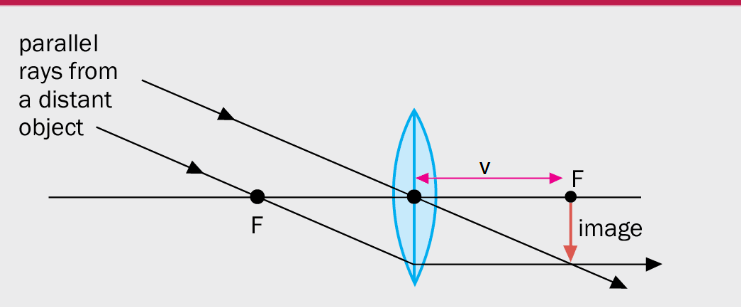 | - Inverted - Real - Diminshed | → opposite side of lens | - object lens of a telescope | |
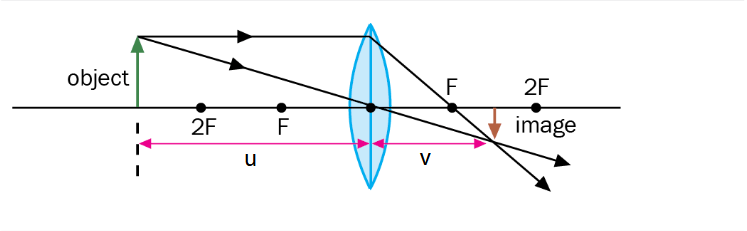 | - Inverted - Real - Diminished | → opposite side oflens | - camera - eye | |
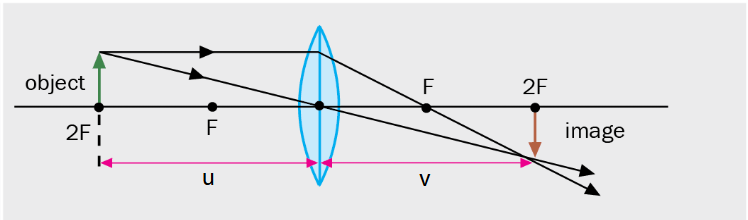 | - Inverted - Real - Same size | → opposite side of lens | - photocopier making same sized copy | |
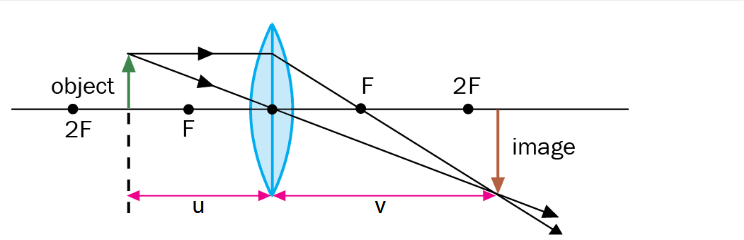 | - Inverted - Real - Magnified | → opposite side of lens | - projector - photograph enlarger | |
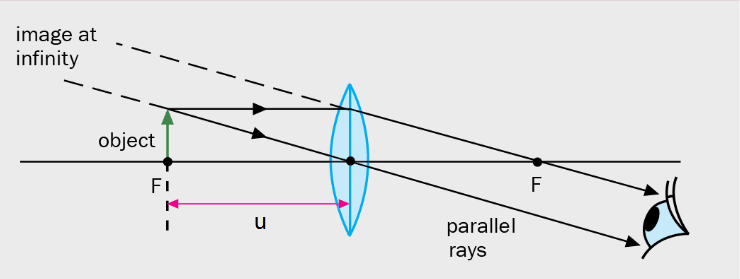 | - Upright - Virtual - Magnified | → image at infinity → same side of lens | - to produce a parallel beam of light, e.g. a spotlight | |
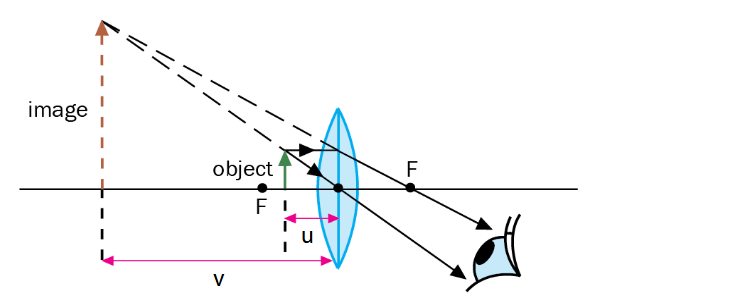 | - Upright - Virtual - Magnified | → image is behind the object → same side of lens | - magnifying |
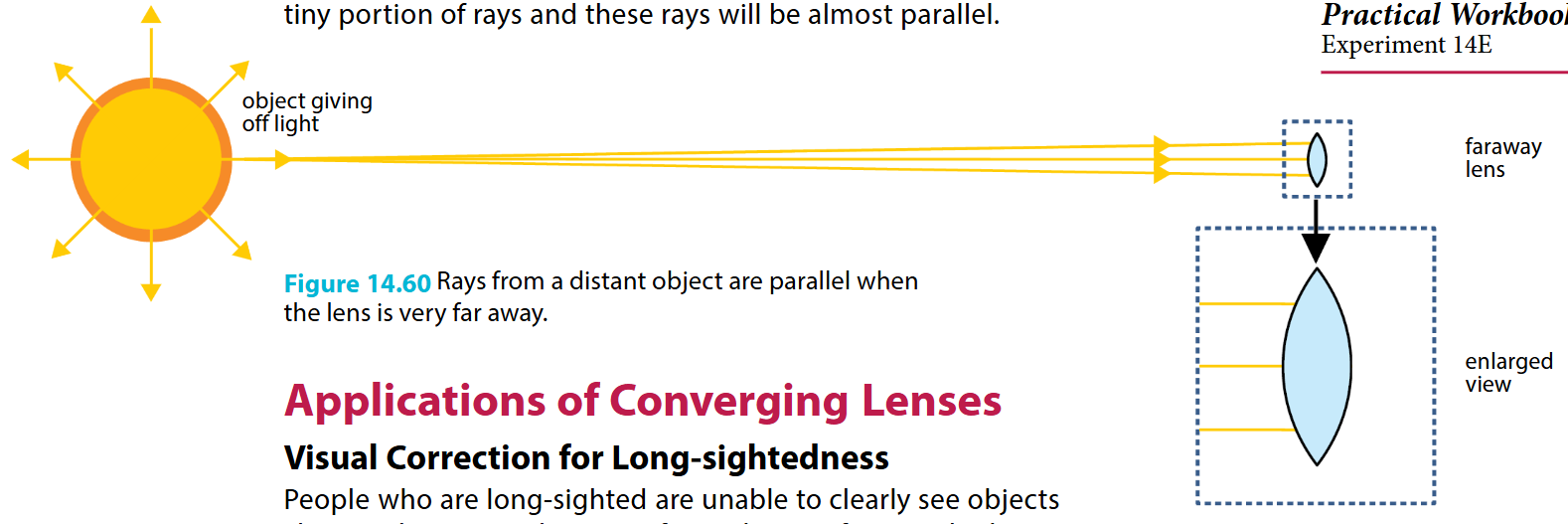
Why are rays from a distant object considered to be parallel?
→ consider a spherical object that is giving out light or reflecting light in all directions.
→ if a lens is very far away → it will only receive a very tiny portion of rays and these rays will be almost parallel.
Somewhat general trend
- as object approaches closer to the lens → the image formed is further and further away from the lens
- Eventually when object is placed at focal point → the image formed will turn from real to virtual
- when object is placed even closer to lens than focus point → image is formed behind the object itself and it is virtual
Important
when object distance = image distance → object distance is twice the focal length away from the lens