Definition
Fats, like carbohydrates are organic molecule that are made up of elements carbon, hydrogen, oxygen. unlike carbohydrates, fats have very little oxygen in proportion to hydrogen. #BiologyDefinitions
- tristearin (beef fat) →
- very little O2 in proportion to H2
Proportion of elements that make up fats are not fixed - no general formula
Fats can be animal or plant fats
- commonly used as a store of energy → mainly by animals
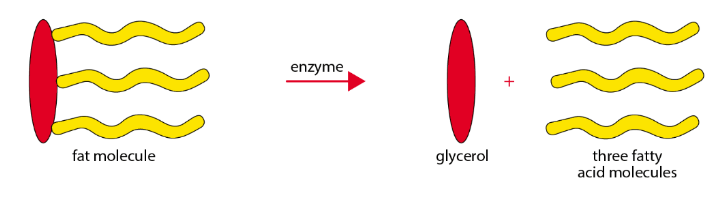
Fats can be broken down into fatty acids and glycerol
Sources of Fats Butter, cheese, fatty meat, olives, many nuts, peas, beans, seeds of castor oil and palm oil Meat of most fishes and ‘white meats’ have relatively less fats. Some fishes like herring and salmon have lots of fats.
Function of Fats Refer to: Functions of Biological Molecules
Quick Reference:
- source and long term storage form of energy
- suitable for long term storage as fats have higher energy value compared to proteins and carbohydrates (2 times more)
- Insulating materials that reduce excessive heat loss
- animals, example seal ⇒ have a thick layer of fat beneath their skin called blubber to reduce loss of body heat
- Solvent for fat soluble vitamins and other vital substances like hormones
- essential part of cells, especially cell membranes
- way to reduce water loss from skin surface; glands in skin secrete an oily substance
- oily substance forms a thin layer over the skin surface → reduce water loss by evaporation
- Oily substance also reduces rate of heat loss from the skin
Tests for Fat ethanol emulsion test refer to Food Tests