What Are Cells:
- All living things made up of billions of tiny cells
Cells: Building blocks of life ⇒ simplest structural and functional units of life
What do cells do:
- take in raw materials
- processes these raw materials to make new molecules
- either used by the cell itself or transported to other parts of the body
Cells have diff structures that perform different roles in the cell
- division of labor ⇒ increases efficiency within the system
- ensures that cell can survive and perform its role within the body
What Does a Cell Consist of?
Definition
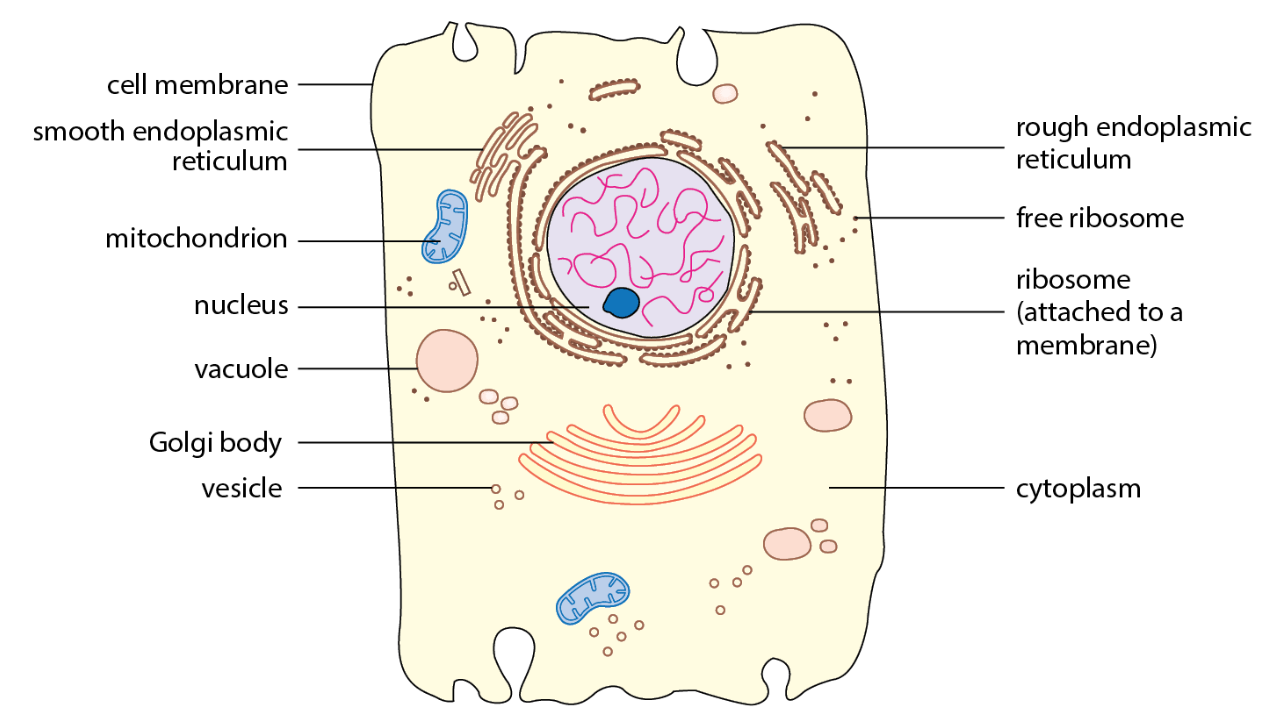
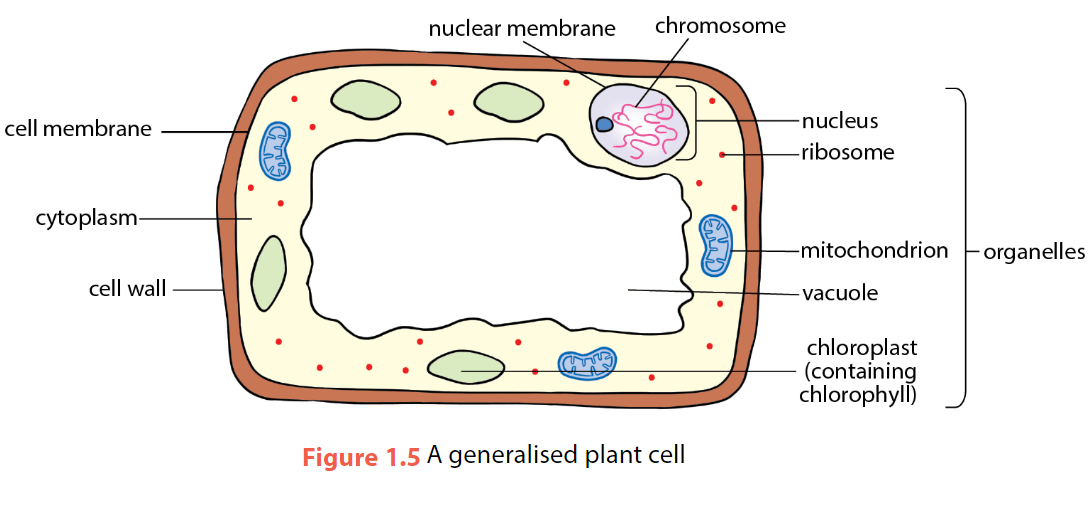
Cell is a unit of life. It consists of a mass of living matter called protoplasm #BiologyDefinitions
Protoplasm Cell Membrane Cell Wall Cytoplasm Nucleus Rough Endoplasmic Reticulum Smooth Endoplasmic Reticulum Mitochondria Ribosomes Chloroplasts Vacuole
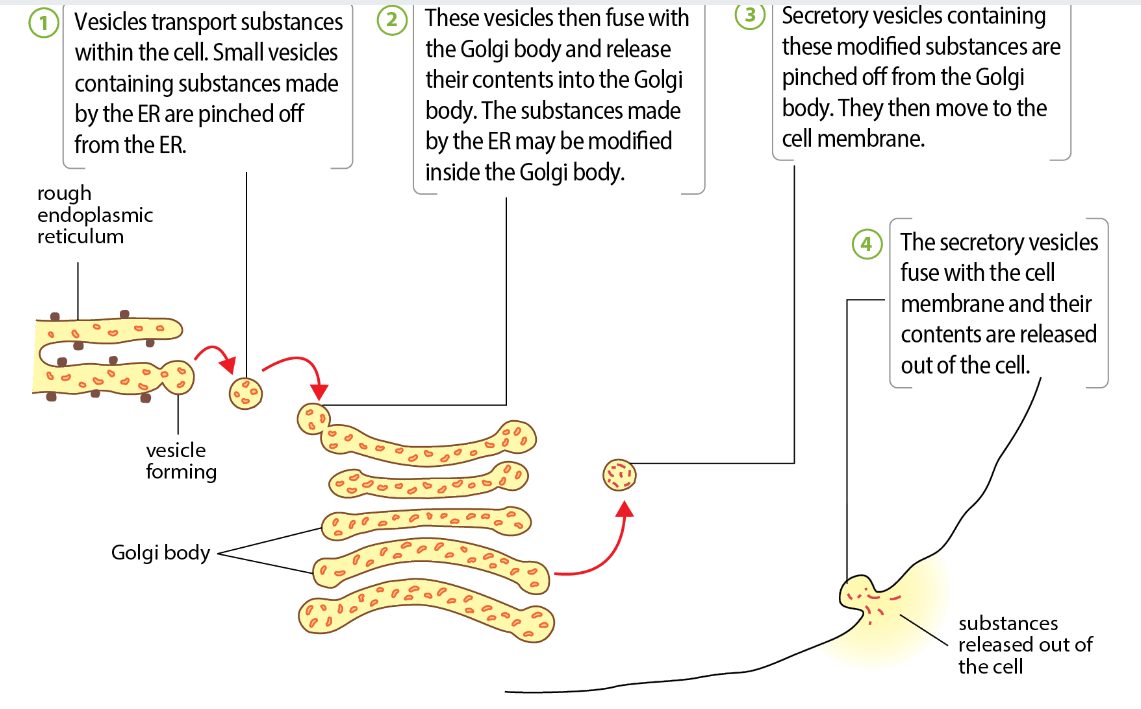
Movement of Substances from ER to out of the cell
-
vesicles transport substances within the cell ⇒ small vesicles ⇒ containing substances made by the ER ⇒ pinched off from the ER
-
These vesicles ⇒ fuse with the Golgi Body ⇒ substances made by the ER might be chemically modified in the Golgi body
-
Secretory Vesicles ⇒ containing chemically modified substances ⇒ pinched off rom the Golgi Body ⇒ move to the cell membrane
-
Secretory Vesicles ⇒ fuse with cell membrane ⇒ contents are released outside of the cell
How are cells adapted to their function
Definition
differentiation is the process by which a cell becomes specialized for a specific function #BiologyDefinitions
- RBC
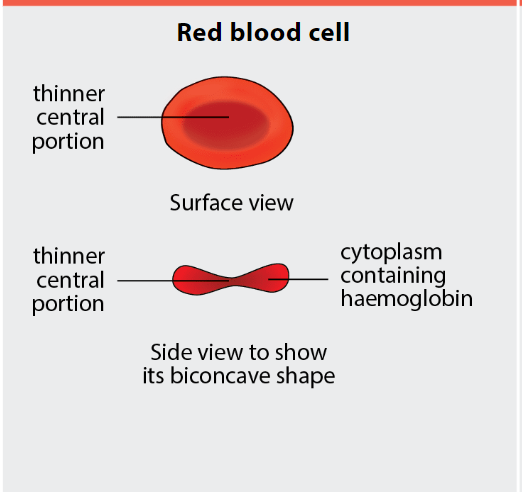
- Contains hemoglobin - binds reversibly to oxygen - transports it around the body
- Circular biconcave shape - increase SA to V ratio - oxygen can diffuse in and out of the cell at a higher rate
- Absence of nucleus - allows for more packing of hemoglobin - more transport of oxygen as more oxygen can fit in the cell. ++
- Flexible - can squeeze through capillaries easily
- Muscle Cell
- Elongated and cylindrical shape, contains many nuclei, contains many mitochondria
- Contains many mitochondria - provide energy for contraction of the muscle cell.
- Has contractile protein fibers - contract and relax to bring about movement
- Many nuclei - allow for cell division.
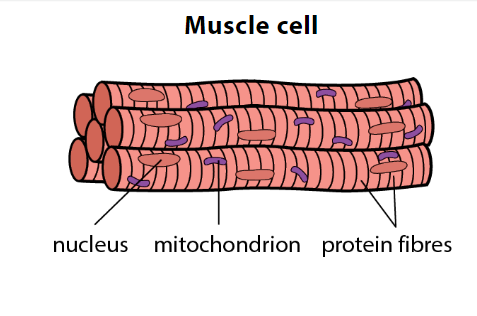
- Root Hair Cell
- Long and narrow protrusion/extension → increase SA to V ratio of cell to soil → absorb water and mineral salts at a higher rate.
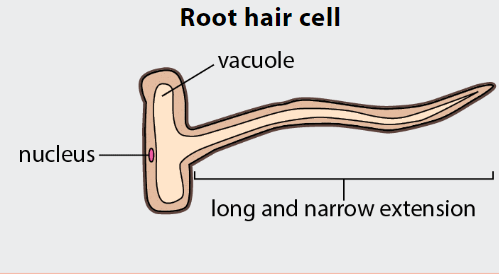
Note: Mitochondria, ER, Ribosomes, Golgi Body ⇒ only visible under electron microscope
Sample
Explain why liver cells have more mitochondria than most cells in the human body
- Liver carries out many metabolic processes like detoxification and deamination of amino acids. a larger number of mitochondria is required to release sufficient energy through aerobic respiration for all of these reactions to occur. thus, it has larger number of mitochondria compared to other body cells.
Sample
what strucures in the plant cell are involved in the process of enzyme synthesis? (2017 MCQ Q1)