Importance of Kidneys
- Kidneys are excretory organs
- they plan an important role in excreting metabolic waste products → such as urea and excess water and mineral salts → in the form of urine
- Kidneys are osmoregulatory
- They can regulate the solute concentration and water potential in the blood, thereby maintaining constant WP in the Blood
What Causes Kidneys to Fail
- high blood pressure
- diabetes
- alcohol abuse (constant heavy drinking)
- Severe accidents that physically damage the kidney
- complications from undergoing major surgery
A person can lead a normal life with one failed kidney ⇒ it both kidneys fail → person will die without prompt medical treatment
Patients with Kidney failure ⇒ may get kidney transplant Donor with 2 healthy kidneys may donate 1 kidney and survive with the remaining kidney ⇒ need to organ match to ensure no complications ⇒ which means Organ Transplant and Tissue Rejection
If donor kidney is not available ⇒ patient can be treated with dialysis using dialysis machine. ⇒ dialysis machine mimics function of kidney ⇒ helps to clean patients blood from metabolic waste products and toxins.
In order for treatment to be effective ⇒ patient needs to undergo dialysis 2-3 times a week ⇒ each dialysis session lasts about 3-5 hours ⇒ depending on patients body size and medical condition.
Dialysis
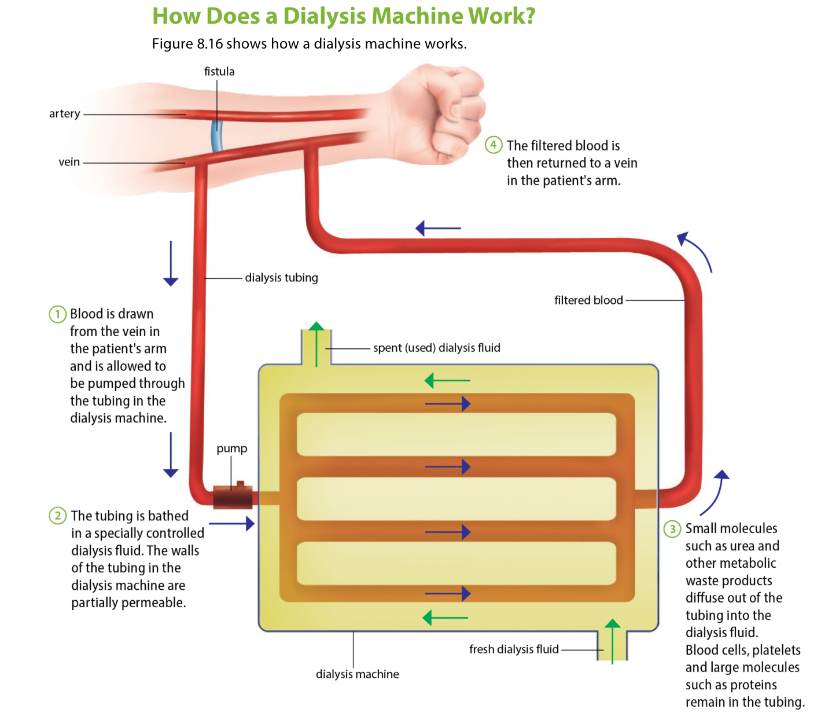
- Dialysis fluid contains same concentration of essential salts for the body to ensure salts do not diffuse out of the blood
- If blood lacks such salts ⇒ salts will diffuse into blood from dialysis fluid
- Tubing is narrow, long and coiled ⇒ to increase SA to V ratio
- Direction of Blood flow⇒ is opposite to flow of bathing fluid ⇒ in order to maintain the diffusion gradient for removal of waste products
- Dialysis fluid does not contain metabolic waste products ⇒ so that concentration gradient can be maintained.
Important
blood entering dialysis machine has highest concentration of urea
Note
Difference Between Dialysis Fluid and Blood Plasma (O level 2021)
State function of dialysis fluid as well: