Final Edited Cardiac Cycle
| Steps |
|---|
| 1. Muscles in both atria contract (atrial systole) ⇒ slight increase in atrial pressure forces blood into relaxed ventricles |
| 2. After a short pause ⇒ Ventricular muscles contract(ventricular systole) ⇒ causing rise in pressure inside the ventricles. ⇒ rise in pressure causes bicuspid and tricuspid valves ⇒ to close ⇒ to prevent backflow of blood into the atria. ⇒ produces a loud ‘lub’ sound. - Once ventricular pressure exceeds pressure in the aorta, semilunar valves in the aorta are forced open. - Blood flows from the right ventricle and left ventricle into the pulmonary artery and aorta respectively. |
| 3. As ventricular muscles contract ⇒ atrial muscles relax ⇒ right atrium receives blood from the vena cava while the left atrium receives blood from the pulmonary veins. |
| 4. Ventricular muscles relax (ventricular diastole) ⇒ Fall in pressure causes semilunar valves to close ⇒ to prevent backflow of blood from the pulmonary artery and aorta into the ventricles. ⇒ produces a softer ‘dub’ sound. ⇒ Bicuspid and tricuspid valves also open and blood flows from the atria into the ventricles as the pressure in the ventricle becomes lower than that in the atria. ⇒ pressure in the ventricles gradually increases as blood continues to enter ventricles from the atria. |
| 5. Atrial muscles contract again ⇒ the whole cycle repeats. |
Systole and Diastole → 2 phases of the cardiac cycle.
- Systole occurs when ventricular or atrial muscles contract
- Diastole occurs when ventricular or atrial muscles relax PULSE IS PRODUCED AFTER EVERY VENTRICULAR CONTRACTION
Ventricular systole and ventricular diastole → make up 1 heartbeat. → lasts for about 0.8 seconds. → short pause between 2 heartbeats.
Atria and Ventricles work antagonistically. when atrial muscles - ventricular muscles relax and vice versa
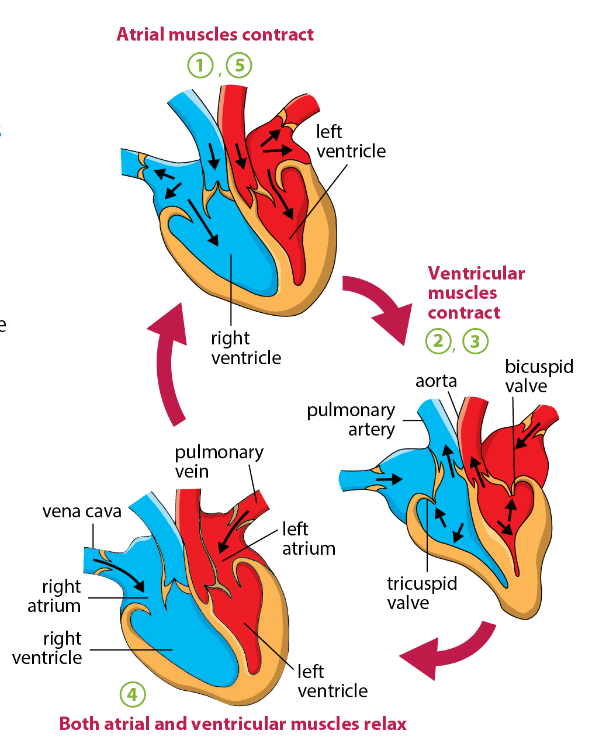
Summary
| Atrial Systole | Ventricular Systole | Diastole | |
|---|---|---|---|
| Muscular Contractions: | Atrial muscles contract, ventricular muscles relax | Ventricular muscles contract; atrial muscles relax | Atrial muscles relax; ventricular muscles relax |
| Blood Flow | From atria to ventricles | From ventricles to the aorta and pulmonary arteries | Into atria and ventricles |
| Valves | Bicuspid and tricuspid valves open; semilunar valves close | Bicuspid and tricuspid valves close; semilunar valves open | Bicuspid and tricuspid valves open; semilunar valves close |