- Enclosed in a protective sac of tissue called the pericardium
- pericardium is made up of 2 layers of membrane
- there is a fluid found in between the 2 layers of membrane to reduce friction when the heart is beating
structure of the heart
- size of clenched fist
- lies in the thorax behind the chest bone in the middle of the 2 lungs
- roughly conical shape
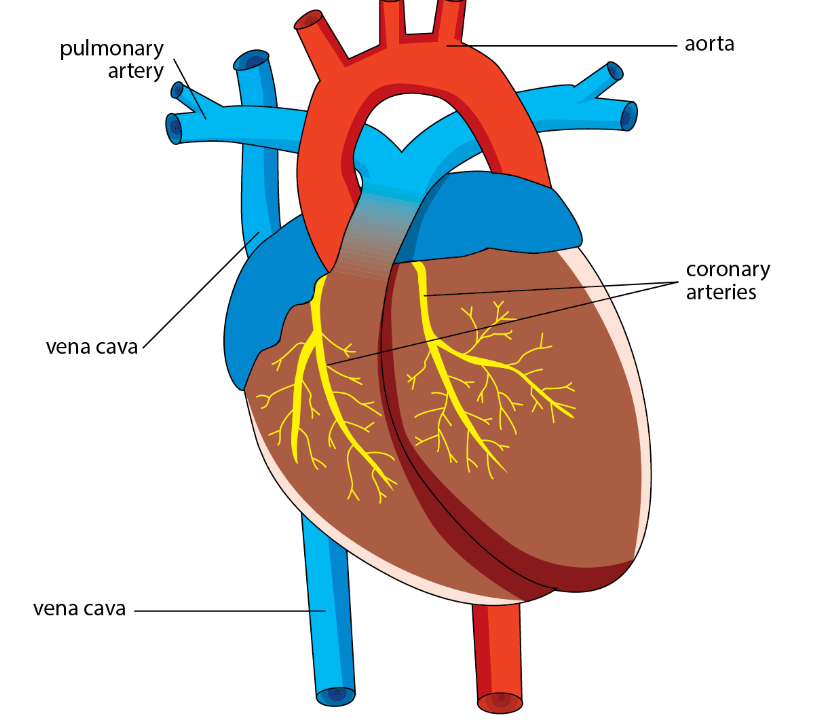
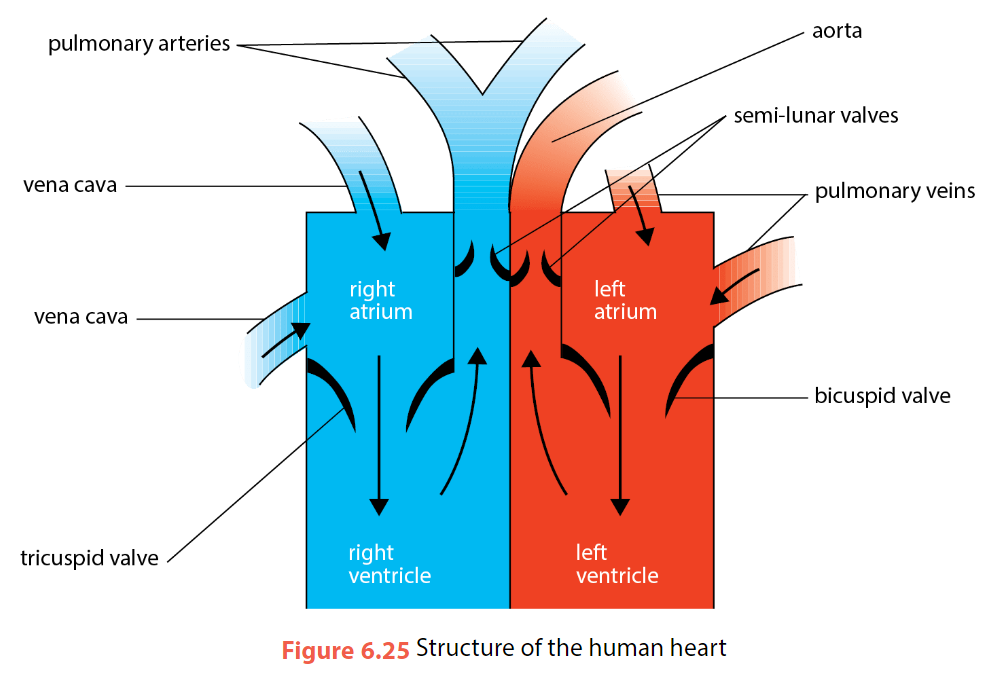 Human Heart - has 4 chambers
the walls of the chambers are formed by heart muscles.
when heart muscles contract - they enable heart to force blood out and around the body
NEVER USE THE WORD PUMP**
Human Heart - has 4 chambers
the walls of the chambers are formed by heart muscles.
when heart muscles contract - they enable heart to force blood out and around the body
NEVER USE THE WORD PUMP**
Left and right separated by a muscular wall called the median septum deoxygenated blood on right, and oxygenated blood on the left.
| Atria | Ventricles | Median Septum |
|---|---|---|
| - 2 upper chambers → left atrium and right atrium - Receives blood from the veins - comparatively thin muscular walls → since they only force blood into the ventricles that lie directly below them → this does not require high pressure. | - 2 larger lower chambers - left and right ventricle - Ventricles → have comparatively thick muscular walls. - left ventricle muscle → is much thicker → because it forces out blood which goes around the whole body → which requires high pressure. - right ventricle has slightly thinner muscular walls than left ventricle. as it only forces out blood to the lungs → and the lungs are closer to the heart. | - muscular wall that separates the left and right side of the heart - it prevents the deoxygenated blood on the right from mixing with the oxygenated blood on the left - if this happens - then the amount of O2 being carried to the rest of body and to the cells will be decreased. |
| Atria and ventricles behave in an antagonistic fashion** | ||
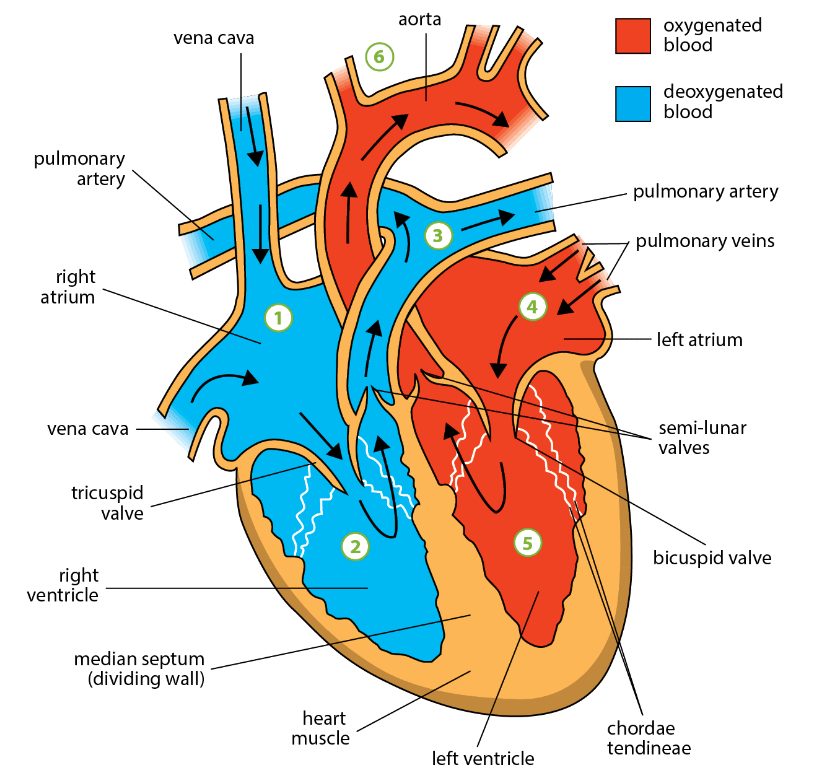 | ||
| Flow of oxygenated and deoxygenated blood through the heart is controlled by opening and closing of valves found in the heart. |
| Valve | Function |
|---|---|
| Tricuspid valve | Prevents backflow of blood from the right ventricle to the right atrium |
| Bicuspid valve | Prevents backflow of blood from the left ventricle to the left atrium |
| Aortic Valve (semilunar valve in the aorta) | Prevents backflow of blood from the aorta to the left ventricle |
| Pulmonary valve (semilunar valve in the pulmonary artery) | Prevents backflow of blood from the pulmonary artery to the right ventricle. |
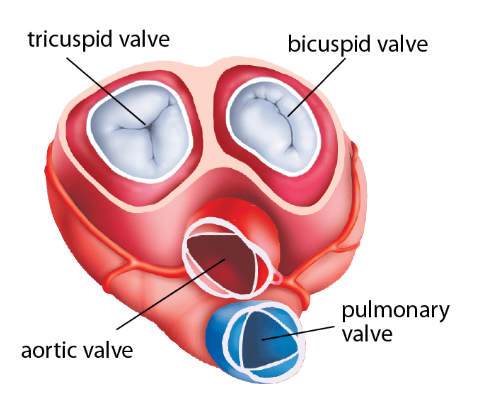 |
Path that blood takes through the heart
Path that blood takes through the heart
Cardiac Cycle
The Pulse
left ventricle: more muscle tissue ⇒ Contract at greater force ⇒ greater BP is generated ⇒ transport Blood to all body parts easily\