Antibiotics: drugs used to treat bacterial infections → made by microorganisms + used to kill/inhibit growth of bacteria.
- Work by interfering with growth and metabolic activities of bacteria. (does not include effects on cell wall, cell membrane etc.)
- antibiotics are ineffective against viruses
- Many antibiotics → chemically modified to make them more effective in treating diseases
How Do Antibiotics Work
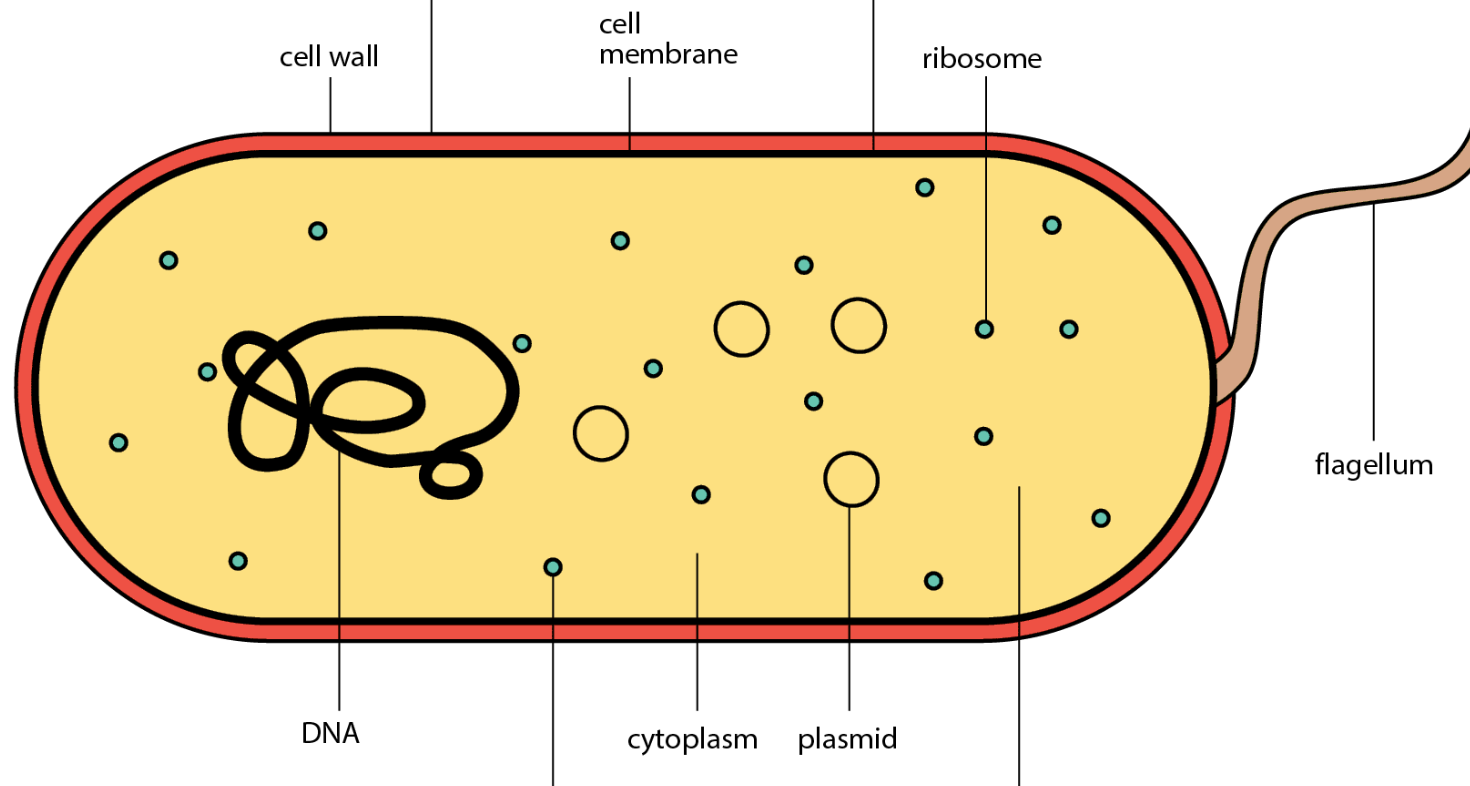
- how antibiotic acts on typical bacterial cell
| Part Which Antibiotic Takes Effect On | Effect of Antibiotic on Part |
|---|---|
| Cell Wall | Inhibits Synthesis of Bacterial Cell Wall - Some antibiotics → prevent synthesis of bacterial cell wall. - when bacterial cell walls → weakened → water enters cell by osmosis. - cell then expands, bursts, then dies |
| Cell Membrane | Inhibits Cell Membrane Function - Some antibiotics → inhibit cell membrane function → breaking up bacterial cell membrane. - Without cell membrane → bacterial cell → no longer protected from external env. as any substances can move into and out of bacterial cell |
| Ribosomes | Inhibits Protein Synthesis in Ribosome - Some antibiotics → bind to bacterial ribosomes → preventing ribosomes from taking part in → protein synthesis → and thereby inhibiting growth |
| Cytoplasm | Inhibits Enzyme Action in Cytoplasm - Bacteria Require vitamin called → folic acid for growth. → some antibiotics inhibit enzyme needed for synthesis of folic acid. → this in turn inhibits growth of bacteria |
Why Antibiotics Can Kill Bacteria But not Viruses
Antibiotics → administered in diff. forms to kill bacteria.
- They act on bacterial cell walls. Viruses do not have cell walls
- They break up cell membranes. Viruses do not have cell membranes
- They act on ribosomes → inhibiting protein synthesis and growth. Viruses do not have ribosomes and they do not grow.
- They prevent folic acid synthesis by inhibiting enzyme action in cytoplasm → viruses do not have cytoplasm, enzyme for folic acid synthesis, and do not synthesize folic acid.
Person with viral infection → requires rest. → with time body can recover from infection. Patient can be given antivirals, which are medications that help body fight off disease causing viruses.
How Does Antibiotic Resistance Come About?
- Superbugs → bacteria that are resistant to medicines like antibiotics
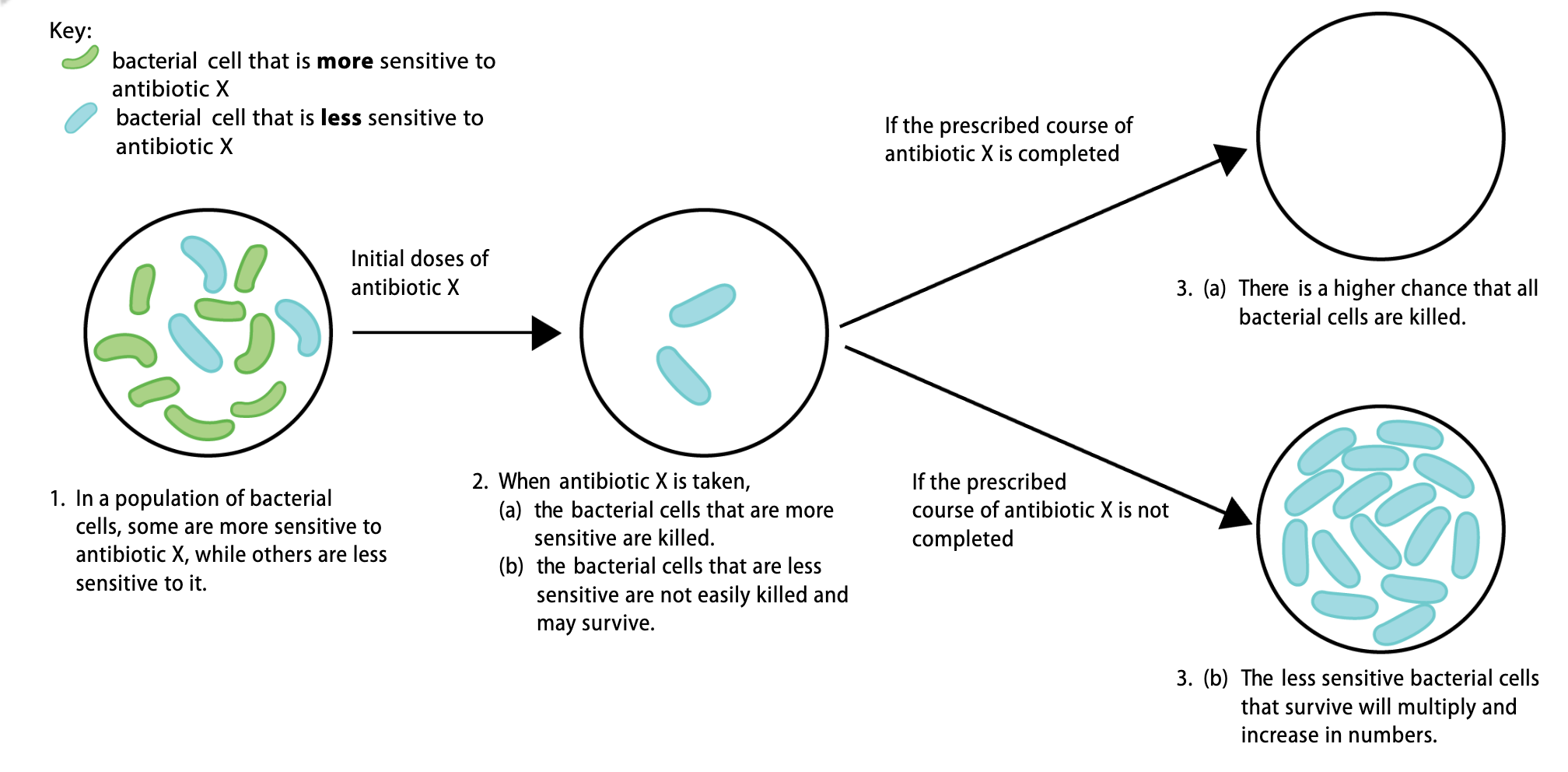
- In population of bacterial cells → some are more sensitive to antibiotic X, while others are less sensitive to it
- When antibiotic X is taken
- Bacterial cells that are more sensitive are killed
- Bacterial cells that are less sensitive are not easily killed and may survive.
If prescribed course of antibiotic C is completed:
- there is higher chance that all bacterial cells are killed
If prescribed course of antibiotic X is not completed:
- The less sensitive bacterial cells → undergo mutation evolution → that survive will multiply and increase in numbers
Over time → subsequent generations of bacterial cells → become less sensitive to antibiotic X. → eventually population of bacterial cells → become resistant to antibiotic X
- Antibiotic X → will not be able to kill → antibiotic-resistant bacterial cells → other types of antibiotics will be required → to treat bacterial infection
Hence → to prevent antibiotic resistance in bacteria → prescribed course of antibiotics should be completed Antibiotics should not be used for non-bacterial infections
Sample
Explain why Small Number of Bacteria Grew with Antibiotic 1
- Only few bacteira from sample are resistant / Some Bacteria were NOT Sensitive to Antibiotic 1 at all. → causes by mutation/genes.
- Thus they survive and grow, reproduce, multiply
Sample
Talking about which antibiotic to use → talk about effectivity of Antibiotic.
Reducing Antibiotic Resistance
- Not misusing or overusing antibiotics
- Completing full course of antibiotics prescribed by doctors → so that all bacteria are killed.
- Using antibiotics only when necessary
- Develop new antibiotics
- Do not use same antibiotic for too long / rotate antibiotics
- Use combinations of antibiotics