Dark Peppered Moths
1848 - dark peppered moth was rare sighting in England. by 1900 - they became very common in country
during that period - england was experiencing industrialisation. many factories that were built used coal and fuel. burning of coal produces dark smoke that covered the env. result → trunks of trees were covered with soot from smoke
Scientists found that dark peppered moths were not able to camouflage better on blackened tree trunks compared to light peppered moths. they avoided being eaten and had more time to reproduce. over time → the population of dark peppered moths increased due to natural selection
Antibiotic resistant strains of bacteria
indiscriminate use of antibiotics has led to the evolution of bacteria that are resistant to certain types of antibiotics. genetic variations occur in bacteria bc of mutation bacteria with mutation that gives them resistance against antibiotics will survive, while those without this mutation will die. those that survive will pass their alleles to their offspring. over time, antibiotic resistant bacteria emerge. Antibiotics
Darwin Finches
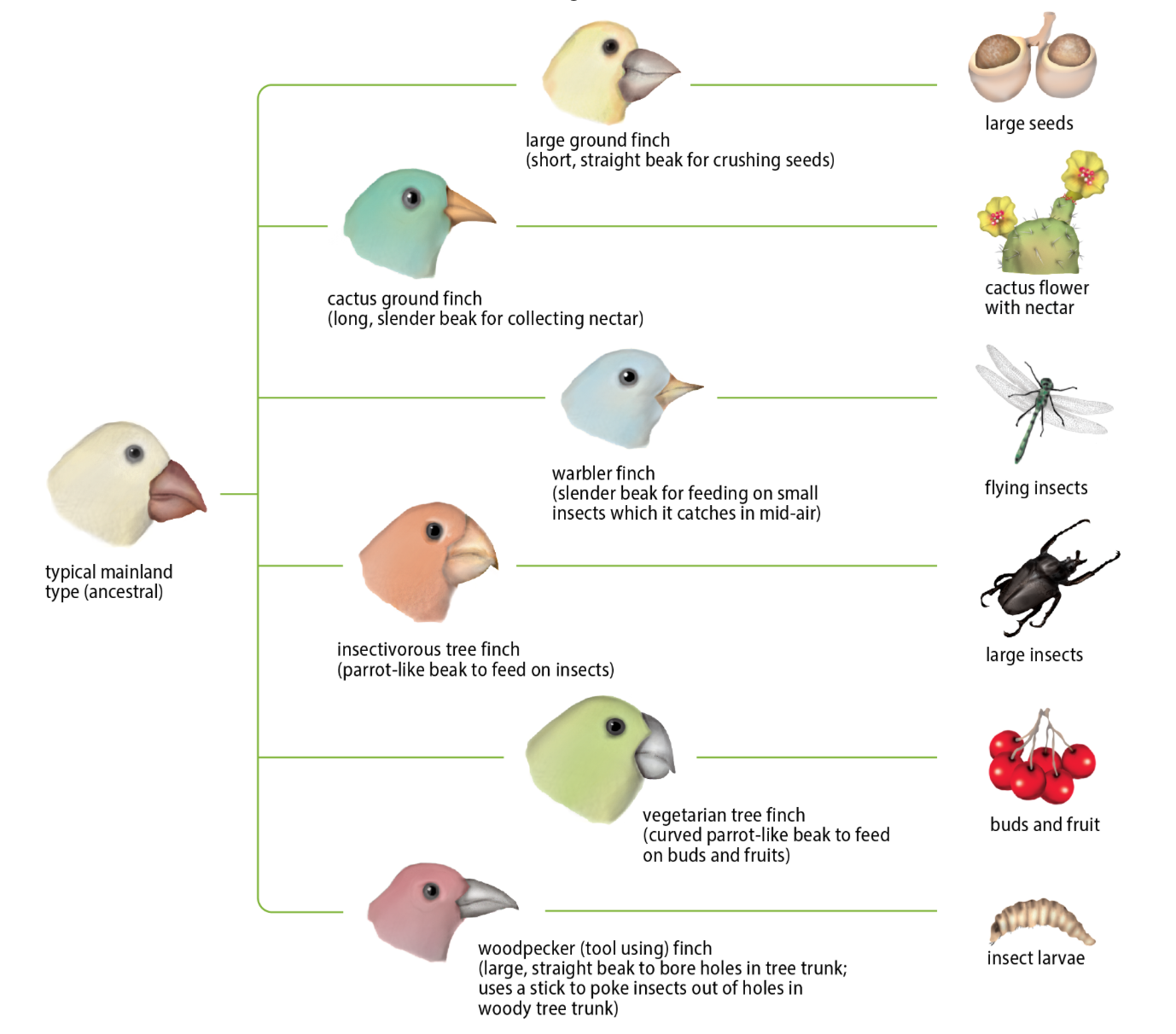
- on south american mainland - finches have short, straight beaks to crush seeds
- on Galapagos islands, there are 6 major types of beaks, each suited to particular diet
Darwins Explanation
- Ancestral finches from mainland managed to get to islands
- once separated, island finches began to evolve along diff lines from mainland finches
- island finches reproduced rapidly and competition arose. there was struggle for existence
- variations occured among the finches, natural selection begins to take place
- those finches with beaks suited to a particular diet on the islands survived and reproduced
- eventually 6 major types of finches evolved, each of which was adapted to a particular food source such as seeds, fruits, insects.
in the e.g. of Galapagos Finches → 1 common ancestor had evolved into several different species of finches, each adapted to a particular diet. such process is called adaptive radiation
darwins explanation on finches in Galapagos island provides evidence for role of natural selection as a possible mechanism for evolution