Meiosis
- produces genetically dissimilar gametes with different combinations of the parental chromosomes.
- results in genetically diff. offspring
Random Fertilisation
during fertilisation → any one of the millions of sperm released can randomly fuse with egg to form a unique zygote. as each gamete is unique, offspring produces from the fusion of gametes during fertilisation will also be genetically different.
Mutation
genes usually passed on from 1 generation to another unchanged. before cell divides → chromosome replicate or divide and genes they carry are copied exactly. hereditary depends on this accurate gene copying or replication. occasionally error may occur and gene may be modified or chromosome may be altered. called mutation
Definition
Mutation is change in the sequence of a gene or in the chromosome number. #BiologyDefinitions
Diversity within species is outcome of mutations.
Gene mutation produces variation between individuals as it results in new alleles of genes. If mutation occurs during gamete production → resulting genetic change can be inherited by offspring.
Mutation may also result in change in number of chromosomes in an organism. called chromosome mutation
Mutations can be inherited → passed down through gametes from parents to offspring. e.g of conditions that result from gene mutation are albinism and sickle cell anaemia.
Important
mutations like simple mutation of skin cells will obvs not be passed down
Albinism
- example of recessive gene mutation
- Individuals who are homozygous for the albinism allele are albinos.
- albinism is characterised by absence of pigments in skin, hair, eyes.
- since iris does not contain any pigment, it will appear red because of colour of blood vessels in it.
- Albinos are very sensitive to sunlight and their skin can get sunburnt easily.
Sickle Cell Anaemia
- example of gene mutation
- mutation results in change in the structure of the gene.
- involves a change in the sequence of bases or nucleotides in the DNA
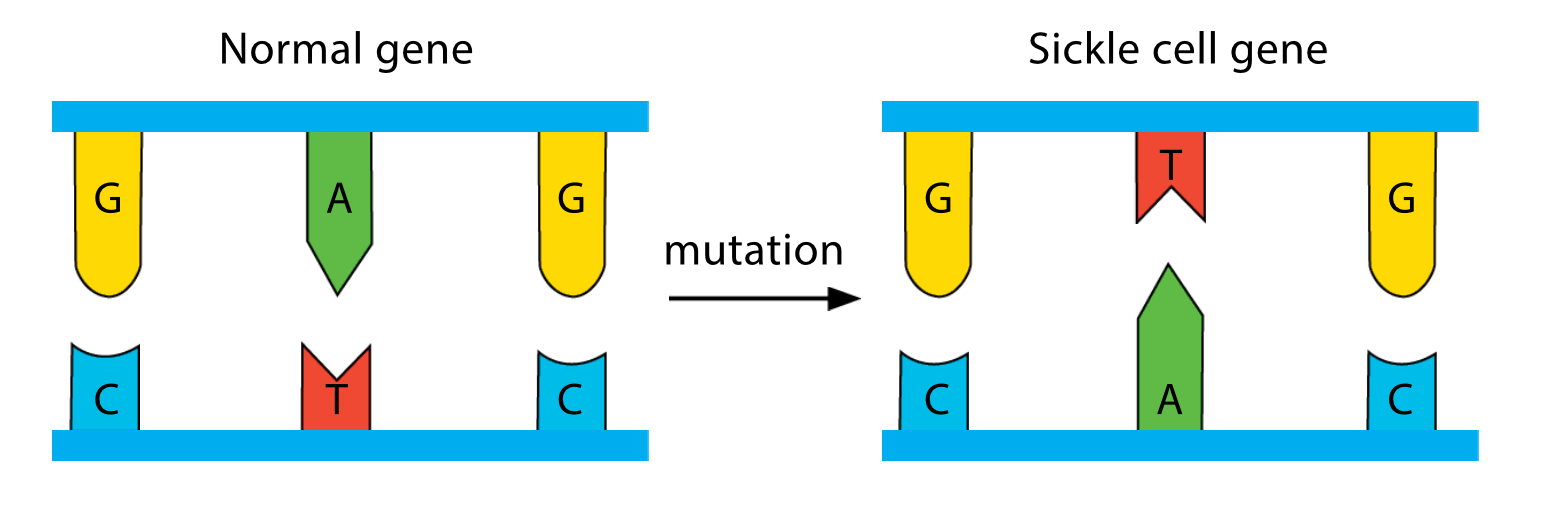 gene controlling haemoglobin production is involved in sickle cell anaemia.
| Characteristics of Mutated Gene | Encodes Haemoglobin S (HbS) protein in RBC HbS is almost same as normal haemoglobin. Causes change in 3D shape of haemoglobin molecule. HbS molecules clump together → making the cell sickle shaped. 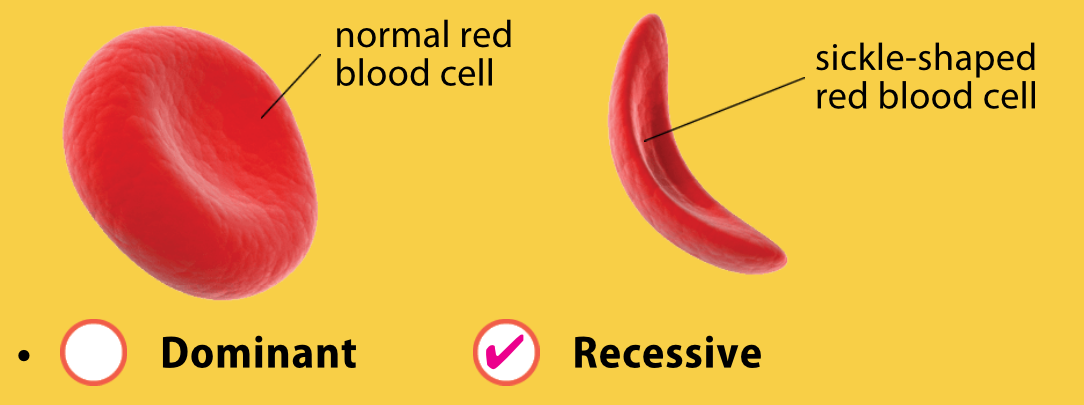 what this means - expressed only in the homozygous recessive condition |
| Phenotype | people who are homozygous recessive have abnormal haemoglobin in their RBC when oxygen concentration in their blood increases, the red blood cells become sickle shaped. |
sickle shaped cells → lose ability to transport oxygen. they are fragile and sticky and can get stuck in narrow blood vessels. this slows / blocks flow of oxygen to parts of the body. sickle cell anaemia can be fatal.
Down Syndrome
-
condition that result from chromosome mutation
-
mutations may cause change in the chromosome number.
-
humans normally have 46 chromosomes.
-
however some people have 1 extra chromosome — have 47 chromosomes in body cells.
-
normally zygotes with extra chromosome would fail to develop.
-
one of the few exceptions is a zygote with an extra copy of chromosome 21.
-
known as trisomy 21
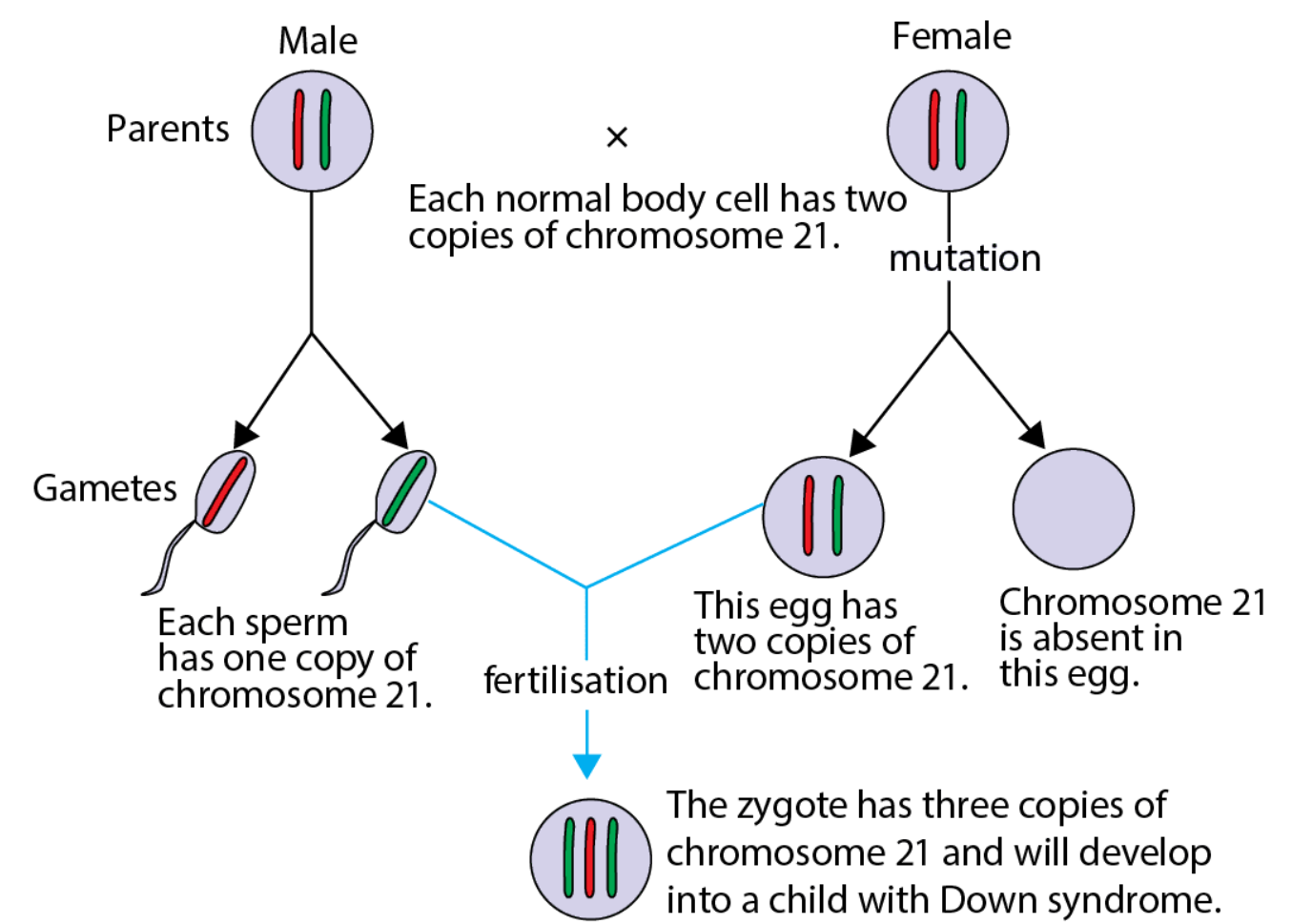 the older the mother - the higher the chances that copies of chromosome 21 will not separate during gamete formation.
it is also possible for mutation to occur in sperm, resulting in sperm that carry an extra chromosome 21.
the older the mother - the higher the chances that copies of chromosome 21 will not separate during gamete formation.
it is also possible for mutation to occur in sperm, resulting in sperm that carry an extra chromosome 21.
Mutagens
- rate of spontaneous mutation is usually very low.
- however rate of mutation is greatly increased with the presence of certain agents in the external environment.
- such mutagenic agents are called mutagens
- ionising radiation → such as UV light, alpha beta and gamma radiations are mutagenic.
- some chemicals, if present in certain concentrations are mutagenic.
- e.g. of chemical mutagens are tar and formaldehyde (in cigarette smoke) and a drug called lysergic acid diethylamide (LSD)
FACTORS to write in exam: Radiation and chemicals.