Definition
Meiosis is a type of cell division that gives rise to genetically dissimilar cells in which the chromosome number is halved due to the separation of homologous chromosomes #BiologyDefinitions
Homologous Chromosomes:
- One chromosome from each parent
- Same shape
- Same size
- Same sequence of genes
Consider cell containing 2 pairs of chromosomes.
- for each pair of chromosomes → one chromosome is inherited from the male parents and the other from the female parent.
- they have same shape, same size, and same sequence of genes.
- known as homologous chromosomes
During meiosis, parent cell divides to produce 4 daughter cells that are genetically dissimilar.
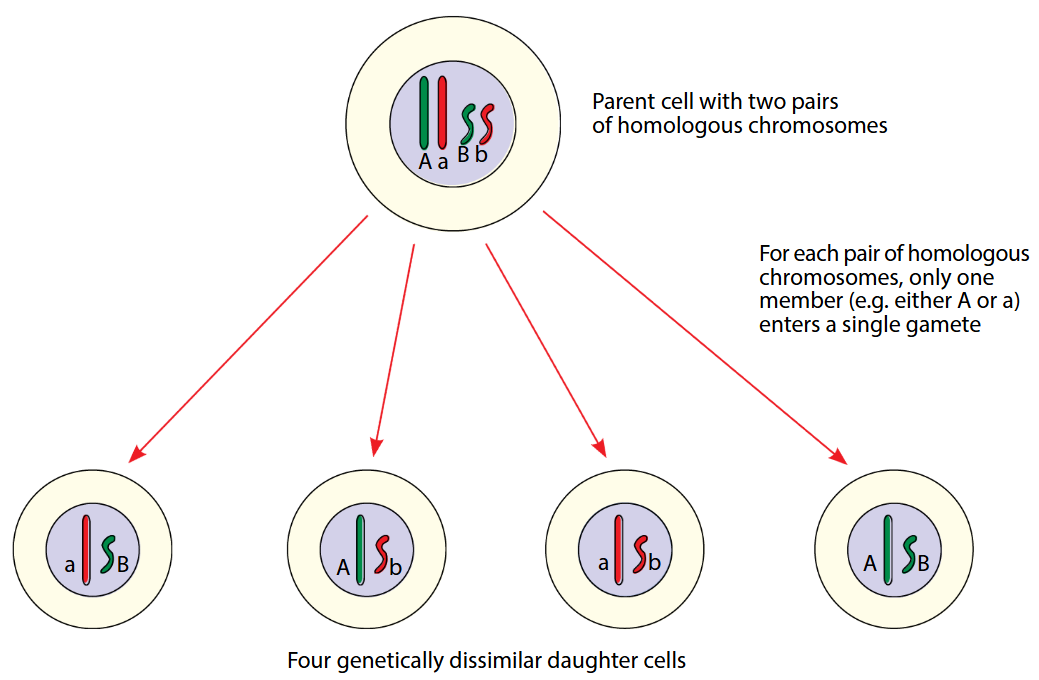 notice that each gamete contains half the number of chromosomes as the parent cell. Hence meiosis is a reduction division.
Importance of Meiosis
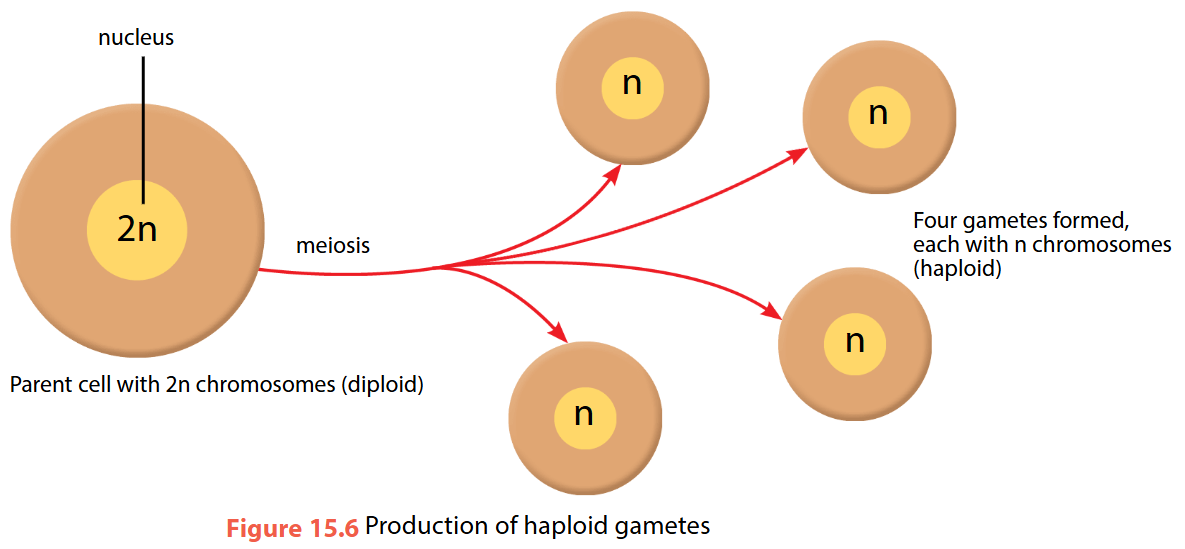
1. Meiosis Produces Haploid Gametes
- During meiosis → each pair of homologous chromosomes in the parent nucleus → separates → to form daughter cells
- Each daughter cell receives one copy of the homologous chromosomes. i.e. haploid number of chromosomes.
- During fertilisation → when nucleus of male gamete → fuses with the nucleus of the female gamete → the normal diploid number of chromosomes is restored in the zygote.
2. Meiosis Produces gametes that are genetically dissimilar
- the greater the genetic variation → the better the species is adapted to changes in the environment.
- E.g. if organism of a species are genetically similar → any change in env. may wipe out the whole population. If one organism dies because of change in env. → all other organisms within same species will also die.
- If organisms of same species are varied → it is unlikely that a change in env. will destroy the whole species. Those that survive → will pass favourable genes to offspring
Extra:
- After meiosis → each daughter cell → will contain 1/2 number of chromosome (haploid (n))
- Diploid (2n) → twice the haploid number of chromosomes.
- From previous diagram → 4 diff. possible gametes can be formed from just 2 pairs of chromosomes.
- Human has 23 pairs of chromosomes → in each gamete. So during meiosis → the difference combinations that can be derived is numerous and together with random fertilisation → siblings usually do not look alike.
Sample
Importance of gamete being haploid
- prevents the doubling of chromosomes in subsequent generations
- restores normal diploid number of chromosomes in the zygote