Definition
Asexual reproduction is the process that results in production of genetically identical offspring from 1 parent, without the fusion of gametes. #BiologyDefinitions
- Asexual reproduction involved mitosis. Offspring produced = genetically identical to parent.
Asexual reproduction involves the process of Mitosis
Examples of Asexual Reproduction
Some plants able to reproduce by asexual reproduction.
| Stem Tuber | Rhizome | Runner |
|---|---|---|
| Stem tuber is the swollen end of an underground stem. - it has many buds. - during favourable seasons → buds will use up the food stored in the tuber → to grow → into new plants. - There will be as many new plants → as there are buds. - Potato tubers are stem tubers. | - Rhizome is an underground storage stem. - bears scale leaves and buds. - Each bud → can grow into a new plant. | - Runner is a slender shoot → that arises from a bud in the parent plant. - Grows horizontally → over surface of soil. - bud develops along its length. - each bud develops root + leaves, and becomes new plant |
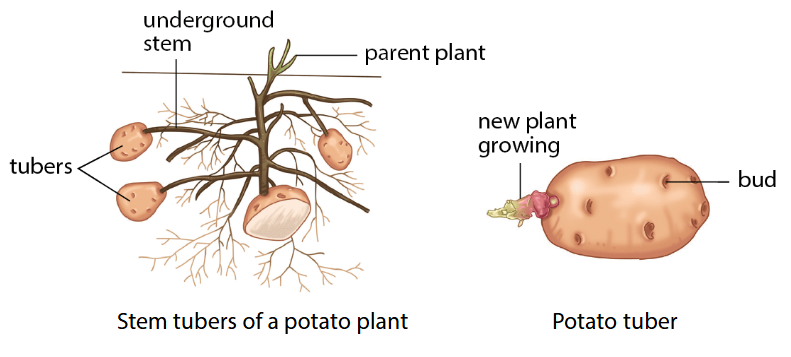 | 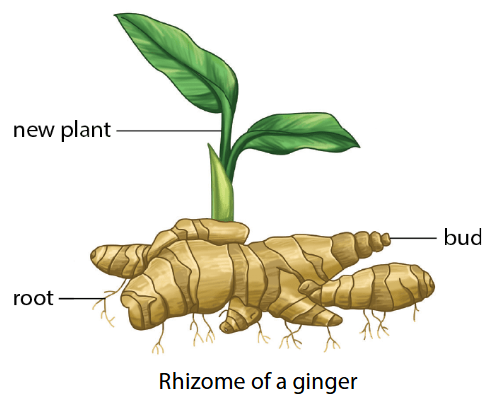 | 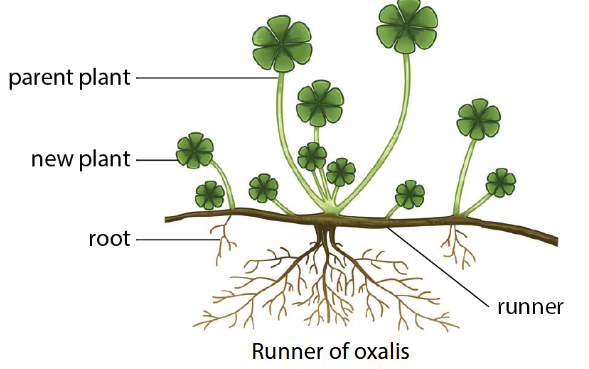 |
Advantages / Disadvantages of Asexual Reproduction
| Advantages | Disadvantages |
|---|---|
| Only one parent is required | There is no genetic variation → in offspring Hence → species are not well adapted → to changed in env. E.g. if parent does not have resistance to certain disease → all offspring too would not have resistance to that disease. → means that whole population of plants could be wiped out by a particular disease. |
| Fusion of gametes is not required | |
| All beneficial qualities are passed from on to offspring | |
| This method of producing offspring → much faster than sexual reproduction |