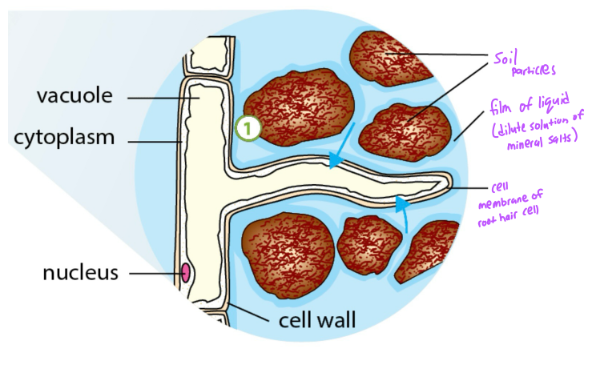
 | 1. Each root hair ⇒ narrow extension of an epidermal cell → grows between soil particles → coming into close contact with the soil solution surrounding it. 2. Thin film of liquid surrounding each soil particles ⇒ is a dilute solution of mineral salts. |
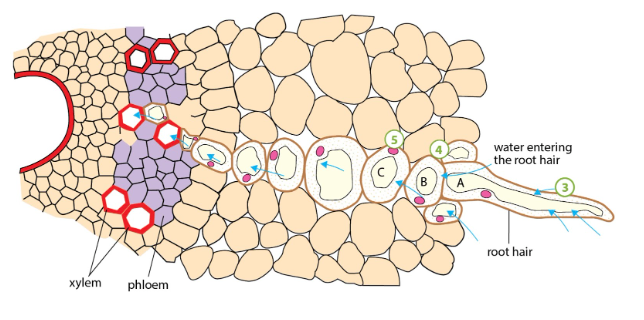 | 3. Cell sap ⇒ in root hair cell ⇒ relatively concentrated solution of sugars and various salts. → thus, cell sap has lower WP than soil solution. → Cell sap and soil solution ⇒ separated by partially permeable cell membrane of root hair cells. ⇒ water enters root hair by osmosis 4. Entry of water ⇒ dilutes cell sap in the root hair cell. Cell sap of root hair cell (Cell A) → now has higher WP than that of the next cell (Cell B). → water passes by osmosis from root hair cell into inner cell 5. Similarly ⇒ water passes from cell B to the next cell. (Cell C) → process of osmosis ⇒ continues until water enters xylem vessels and moves up the plant. |
How to root hairs absorb ions or mineral salts
- Active transport → concentration of ions in soil solution - lower than that in root hair cell sap
- Root hairs ⇒ have to absorb ions against concentration gradient → by active transport
- Energy for this process ⇒ comes from cellular respiration in the root hair cell
- By diffusion ⇒ when concentration of certain ions in soil solution is higher than that in the root hair cell
How is the root hair cell adapted for its function
- Root hair is a long and narrow extension of the root hair cell. increases SA to V ratio ⇒ increases rate of absorption of water and mineral salts by root hair cell
- Cell membrane ⇒ prevents cell sap from leaking out. Cell sap ⇒ also contains sugars, amino acids, and salts. Allows cell sap to maintain lower WP than solution solution. Results in water entering root hair by osmosis
- Root hair cell ⇒ contains many mitochondria. Aerobic respiration ⇒ in mitochondria ⇒ releases energy for active transport of ions into the cell