- Production of Bile already covered
- Deamination of Amino Acids Excess amino acids - transported to the liver. Their amino groups are removed and converted into urea. this is deamination.
Definition
Deamination is the process by which Amino groups are removed from amino acids and converted to urea. #BiologyDefinitions
Urea - removed by body in urine
remains of deaminated amino acids → converted to glucose in liver
Any excess glucose formed in this way is converted to glycogen.
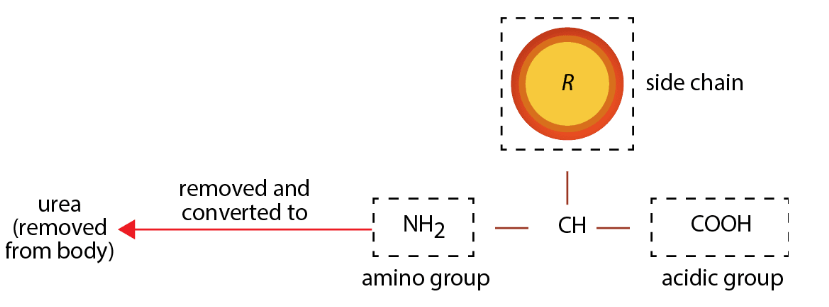
| Process of Deamination and Transport |
|---|
| Excess amino acids undergo deamination in the liver where the amino group is initially converted to ammonia and then changed to uric acid or urea. the rest of the amino acid is recycled or oxidised to release energy. uric acid and urea are then transported to the kidneys where they are filtered out of the blood and excreted out in the urine. |
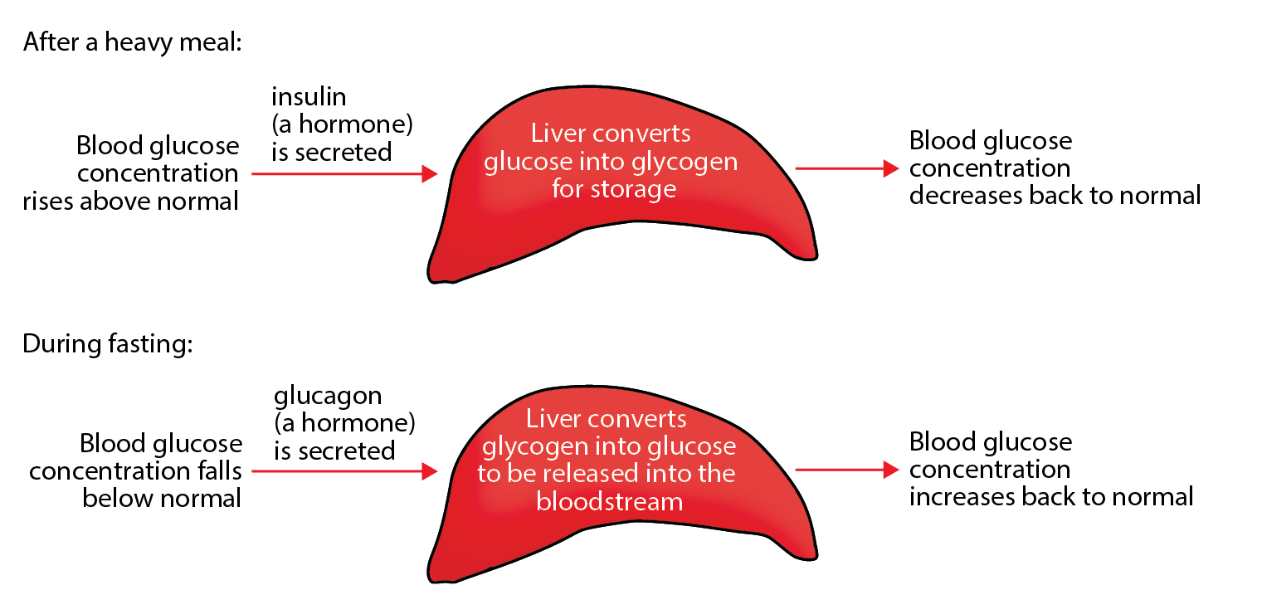
- Regulation of Blood Glucose Concentration → key role in carbohydrate metabolism → by keeping amount of glucose in blood constant → especially after heavy meal or during fasting.
Pancreas - contain special group of cells called islets of Langerhans → secrete hormone called insulin and glucagon into the bloodstream.
 COPY DOWN ANS KEY FROM WS 5.4 ON THIS TOPIC
Important
Glucagon STIMULATES LIVER CELLS to convert glycogen to glucose, does not do it itself.
- Breakdown of hormones Hormones - after they have served their purpose are broken down in liver.
- Detoxification
Harmful substances → absorbed into blood from gut
these substances are made harmless by liver cells.
Definition
Process of converting harmful substances into harmless ones is known as detoxification. #BiologyDefinitions
Alcohol - example of harmful substance broken down by liver → can cause damage to digestive system and slows down brain function.
Liver cells contain an enzyme that breaks down alcohol → to compounds that can be used in respiration → providing energy for cell activities.