Definition
Nutrition is process by which organisms obtain food and energy for growth, repair and maintenance of the body. #BiologyDefinitions
- Feeding or ingestion → food is taken into the body
- Digestion → large, insoluble, complex in diffusible molecules are broken down into simpler, soluble and diffusable small molecules that can be absorbed into body cells (MUST STATE THE WORD DIFFUSIBLE)
- Absorption → nutrients move from small intestine into the bloodstream via diffusion and active transport.
- Assimilation - nutrients are used by cells to provide energy or to make new cytoplasm for growth
- Egestion → undigested matter is removed from the body
human digestive system → consists of the gut or alimentary canal and organs (liver, gallbladder, pancreas) associated with it. alimentary canal → 9 meter long tube → extends from mouth to anus → with most of its length coiled up in the abdomen or abdominal cavity. Alimentary canal → makes up large part of the organ system for nutrition.
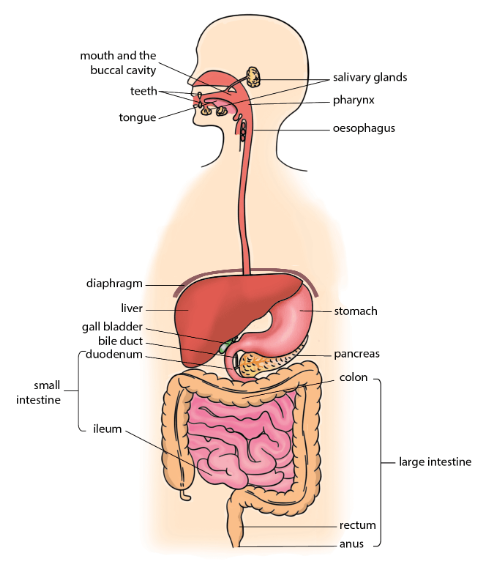
Parts of the Digestive System
Digestion in Humans
Definition
digestion is the process whereby large food molecules are broken down into simpler, soluble, diffusible molecules that can be absorbed into the body cells. #BiologyDefinitions
→ involves 2 processes, physical and chemical digestion
Physical digestion → involves mechanical break up of food into small particles. occurs in:
- Mouth; when you chew food by action of teeth and tongue
- In stomach; where continual contractions and relaxations of muscles in the stomach wall cause churning action. Breaks up food particles and mixes them with digestive enzymes.
- Small intestine: where fats are broken up into small fat molecules by bile salts.
Physical digestion - increases SA to V ratio of ingested food so that digestive enzymes can act on food more efficiently. (Break up)
chemical digestion → breaking down the large molecules in food, such as proteins, starch and fats into small soluble molecules that can be absorbed. (Break down)
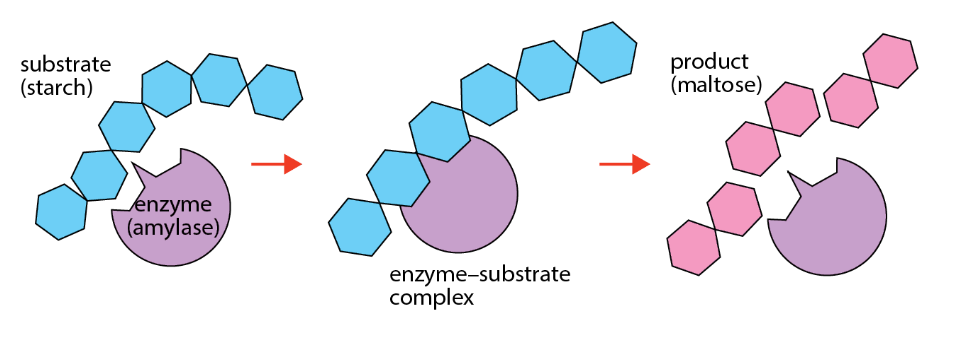 Processes that take place in the mouth
Processes that take place in the stomach
Processes that take place in the small intestine
Processes that take place in the mouth
Processes that take place in the stomach
Processes that take place in the small intestine
Digestion of Different Foods
Carbohydrate Digestion
Protein Digestion
Fat Digestion
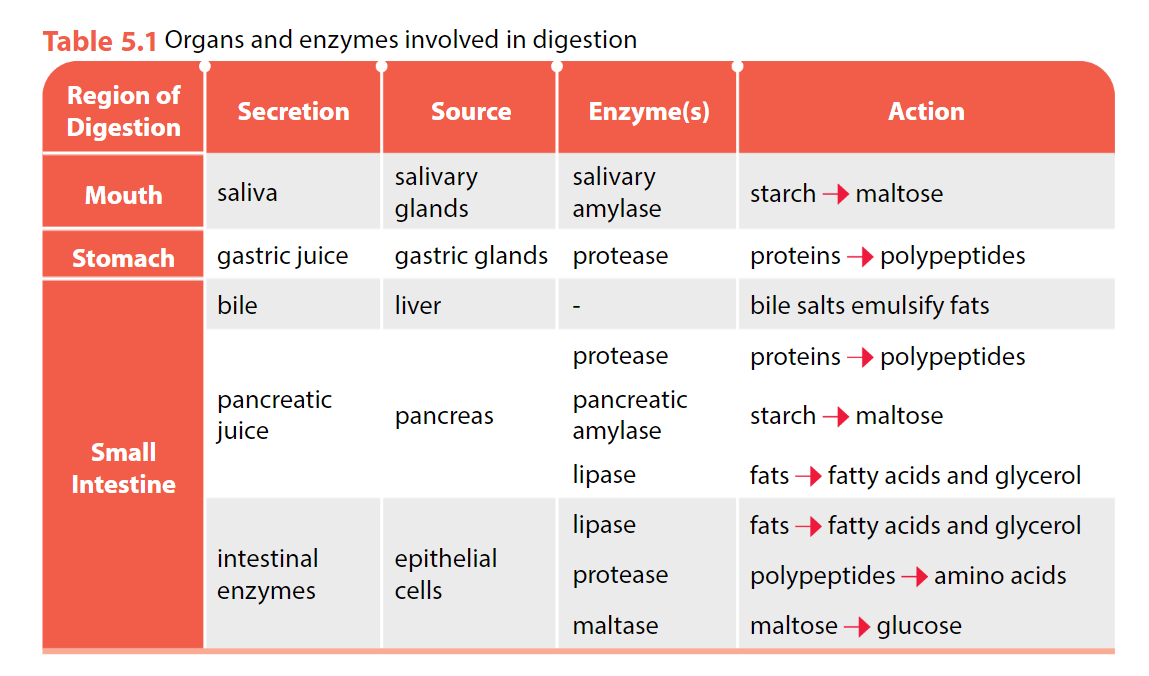
Absorption
Definition
Absorption is the Process whereby Digested food substances are absorbed into the body cells. #BiologyDefinitions
Products of digestion → simple sugars (glucose), Amino acids, fatty acids and glycerol → are absorbed throughout the small intestine - especially along the ileum. Absorbed nutrients diffuse from the cells of the small intestine into the bloodstream.
water and mineral salts - absorbed by the small intestine and the colon. Small intestine absorbs most of the water that enters alimentary canal. About 1-1.5 liters of water pass into large intestine daily → and colon absorbed 90% of that amount How is Small Intestine Adapted for its Function How Does Absorption Take Place in the Intestines What Happens to the Absorbed Nutrients What Happens to Undigested and Unabsorbed Matter
Liver
→ largest organ in human body Functions of the Liver
Effects of Alcohol Consumption
Effects of Alcohol Consumption
Definition
3 parts to answer:
- carbs
- fats
- proteins