Definition
Homologous series is a group of compounds with the same general formula, have similar chemical properties because they have same functional group and show a gradation in physical properties as a result of increase in size and molecular mass of molecules. #ChemistryDefinitions
Definition
Functional group is an atom or group of atoms that gives a molecule of an organic compound its characteristics chemical properties i.e. chemical reactions.
Note
functional group also contributes to its characteristic physical properties of organic compounds.
Alkanes
| Functional Group | Example |
|---|---|
| Alkanes do not have any functional groups. There are only C-C and C-H bonds | 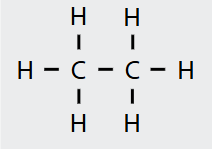 |
Alkenes
| Functional Group | Example |
|---|---|
carbon-carbon double bond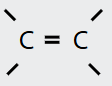 | 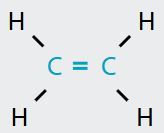 |
Alcohols
| Functional Group | Example |
|---|---|
hydroxyl group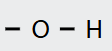 | 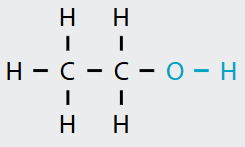 |
Carboxylic Acids
| Functional Group | Example |
|---|---|
carboxyl group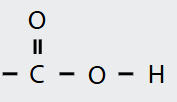 | 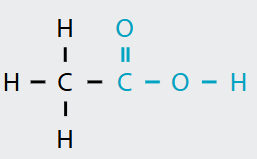 |
General Characteristics of Homologous Series
organic compounds in the same homologous series have following characteristics:
- members of the same homologous series has the same general formula.
- they have same functional group, thus (next point)
- they have similar chemical properties
- each member of the series differs from the next by an additional unit hence a change of 14 units in its molecular mass.
- there is a gradual change in their physical properties as we go down the series from one member to the next, due to an increase in its molecular mass. (melting point, boiling point, and viscosity)
for e.g. the boiling points and viscosity of members increase down the homologous series.
- covered here:
Naming Organic Compounds
Name of organic compound is divided into 2 parts:
- prefix tells us number of carbon atoms in each molecule
- suffix tells us which homologous series the compound belongs to.
| Prefix | Number of Carbon atoms |
|---|---|
| meth- | 1 |
| eth- | 2 |
| prop- | 3 |
| but- | 4 |
| Suffix | Homologous Series |
|---|---|
| -ane | alkane |
| -ene | alkene |
| -ol | alcohol |
| -oic acid | carboxylic acid |