When we speak into a microphone → sound waves are converted into electrical signals through the use of an electronic device known as transducer
Transducers convert charges in physical conditions → such as pressure, temp or light, into electrical signals so that these physical conditions can be measured
Another eg; of transducer → is magnetic pickup that is commonly used in electric guitars.
- they allow sound of the instrument to be heard.
- done by converting the sound into an electrical signal that is then transferred into a sound amplifier.
Wide range of transducers:
- Thermistors
- Light dependant resistors (LDRs)
- Photovoltaic cells
- Piezoelectric sensors
Thermistors
- type of semiconductor
resistance of thermistor varies with temperature → and thus thermistors are also thermally sensitive resistors. A negative temperature coefficient (NTC thermistor → is one where its resistance decreases with temperature.
Thermistors → very accurate + cost effective sensors for measuring temp.
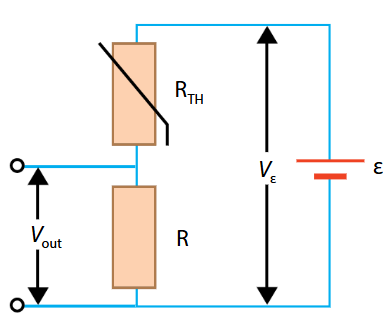
- one of the resistors is replaced by NTC thermistor if temp. increases → resistance of NTC thermistor would decrease by disproportionally higher amt. → causes output voltage to increase. → increase in can be measured to determine the increase in temp.
- output voltage is given by: where R = resistance of the fixed resistor () = resistance of the thermistor () = voltage supplied by electrical source (V)
Light Dependant Resistor (LDR)
- responds to light same way as NTC thermistor responds to temp.
- as amt of light shining on LDR increases, the resistance of LDR decreases.
- like thermistors → LDR also made from semiconductors