Differences between Distance and Displacement
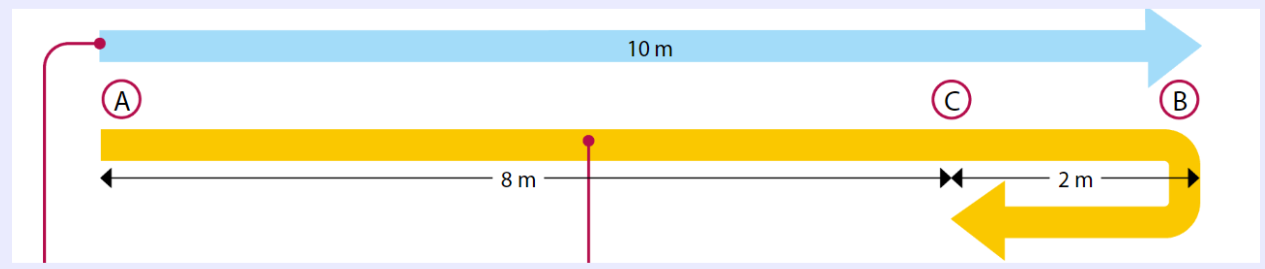
| Distance | Displacement |
|---|---|
| Total length covered by moving object, regardless of direction of motion ⇒ has magnitude only (no direction) → so it is SCALAR. SI unit: meter (m) | Distance measured in a straight line from a fixed reference point. ⇒ has both magnitude and direction. → so it is VECTOR. SI unit: meter (m) ⇒ refers to shortest distance and direction of object from starting point. → can be negative. (object moves in negative direction from starting point) |
| When is displacement negative: |
- moving in opposite direction compared to initial position
- Returning to initial position from positive displacement
- motion in negative direction from initial point
Displacement time graphs
Velocity Time graphs
Important:
⇒ Gravity is the force that pulls both objects down ⇒ both object with lower and higher mass will have same initial acceleration. Terminal velocity ⇒ depends on weight of object (terminal velocity is reached when the weight is balanced with air resistance) ⇒ greater air resistance is required to balance greater weight and thus > heavier object has higher terminal velocity
- as AR increases with increased velocity ⇒ which causes acceleration to decreases.
Example Questions
- Car is travelling 10m/s due north. it reaches a bend and short time later it travels at 10m/s due east. explain why car changes velocity and accelerates.
- speed (numerical value) remains same, but velocity changes as its direction changes. since there is a change in velocity, there must be acceleration
Important
When object is thrown upwards, there is acceleration when object comes to rest momentarily at its highest point.
- Object moves upwards, slowing down due to gravity
- Highest point – velocity = 0 but…
- Object is still under influence of gravity, so object still experiences acceleration due to gravity () acting downwards.