Exothermic
Definition
Exothermic reaction is a chemical reaction in which thermal energy is released to the surroundings, leading to an increase in temperature of the surroundings #ChemistryDefinitions
Important
Reactants have more energy than the Products. There is more energy released to form new bonds (to form yyy mol of xxx compound) compared to energy taken in to break the initial bonds in yy mol of xxx and xxx . Thus there is a negative enthalpy change, as there is net (thermal) energy transfer from the system to the surroundings.
Sample
Explain why maximum temperature is reached when exothermic reaction is complete
- no more thermal energy released as reactants have fully reacted
| Examples of Exothermic Reactions | These Reactions release heat (sometimes light energy as well) to surroundings |
|---|---|
| 1. Neutralisation reactions Acids + Bases (Metal oxides and Metal hydroxides) |  |
| 2. Adding water to anhydrous salts to form hydrated salts | 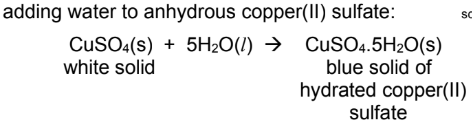 |
| 3. Displacement of Metals Chemical Properties of Metals and Their Compounds, Displacement Reactions |  |
| 4. Reaction of reactive metals with water/steam/acids Metal + Water, Steam, Hydrochloric Acid | 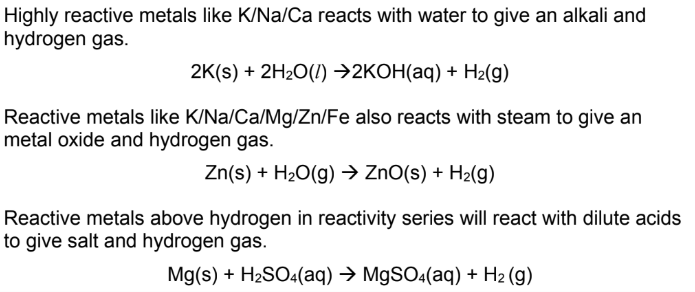 |
| 5. Corrosion of Metals. e.g. rusting Rusting |  |
| 6. Combustion of fuels aka burning of fuels in oxygen (such as coal and methane) link later to chapter 18,19 | 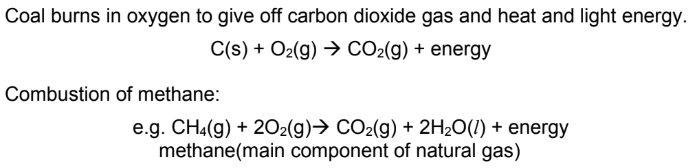 |
| 7. Haber process in manufacture of ammonia link later to chapter 10 | 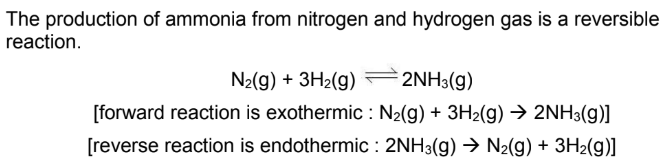 |
| 8. Respiration Link later to chapter 22 |  |
Endothermic Reactions
Definition
A chemical reaction in which thermal energy is taken in from the surroundings, leading to decrease in temperature of surroundings #ChemistryDefinitions
Important
Reactants have less energy than the products. There is more energy taken in to break the initial bonds in yyy mol of xxx compound compared to the energy released to form new bonds (to form yy mol of xxx compound). Thus there is a positive enthalpy change, as there is net transfer of (thermal) energy from the surroundings to the system.
| Examples of Endothermic Reactions | These reactions absorb heat (and in some reactions, light energy) from surroundings |
|---|---|
| 1. Thermal Decomposition Thermal Decomposition of Metal Carbonates | 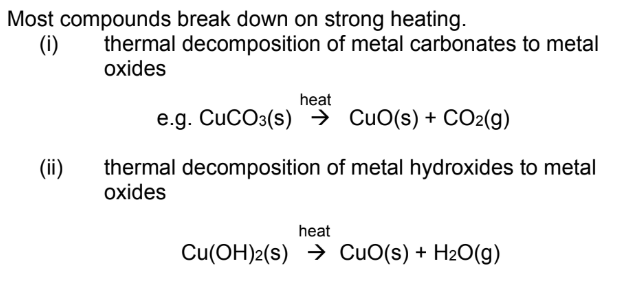 |
| 2. Photosynthesis Link to Chapter 22 later |  |
| 3. Formation of nitrogen oxides in a car engine and during thunderstorms when there is lightning link to chap 22 later’ | 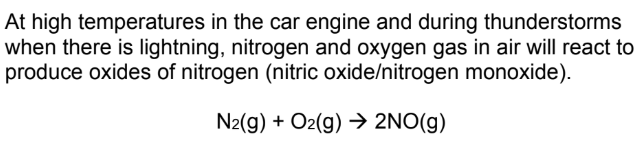 |
| 4. Decomposition of CFCs by sunlight link to chap 22 later |  |
Summary
| Type of Energy Change | Exothermic | Endothermic |
|---|---|---|
| Direction of heat transfer | gives out heat from system to surr. | takes in heat from surr. to system |
| Energy contents of products compared to reactants | lower | higher |
| enthalpy change | negative | positive |
| Temp of reaction mixture | increases | decreases |