- Electrolysis → widely employed industrially → for following purposes
- Electrolysis of molten compounds of reactive metals using inert electrodes
- commonly used to extract reactive metals from their ores
- Electrolysis of aqueous solutions using reactive electrodes
- purification of impure metals
- electroplating
- Purification of Metals (AKA electrolytic refining of metals) Electrolysis has many varied industrial applications and purification is one of the important uses. Application includes → purification of copper to making electrical wiring which requires copper to be very pure
Set up of electrolytic cell used to purify impure metals
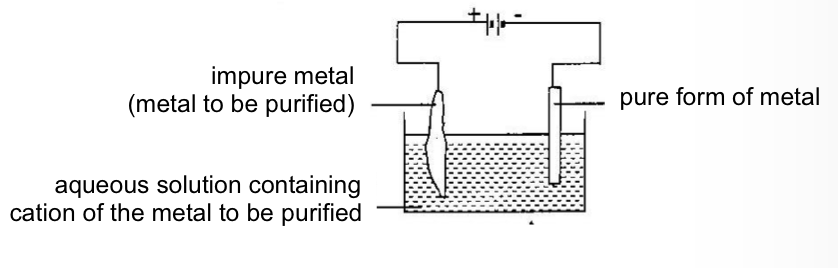 Parts of electrolytic cell used for purification of impure metals are:
- Battery
- Connecting wires
- Positive electrode (Anode); the impure metal
- negative electrode (Cathode); thin sheet of pure form of the impure metal
- Electrolyte: an aqueous solution containing cations of the metal to be purified (e.g. solution of soluble salt of metal Salts Main Note)
Note
- Electrolyte must contain ions of the metal to be purified. E.g. in purification of silver, soluble silver salt solution for example silver nitrate solution/aqueous silver nitrate should be used
- Must include term solution or aqueous when giving examples of electrolytes as a solid silver sulfate cannot conduct electriicty and hence process will not start
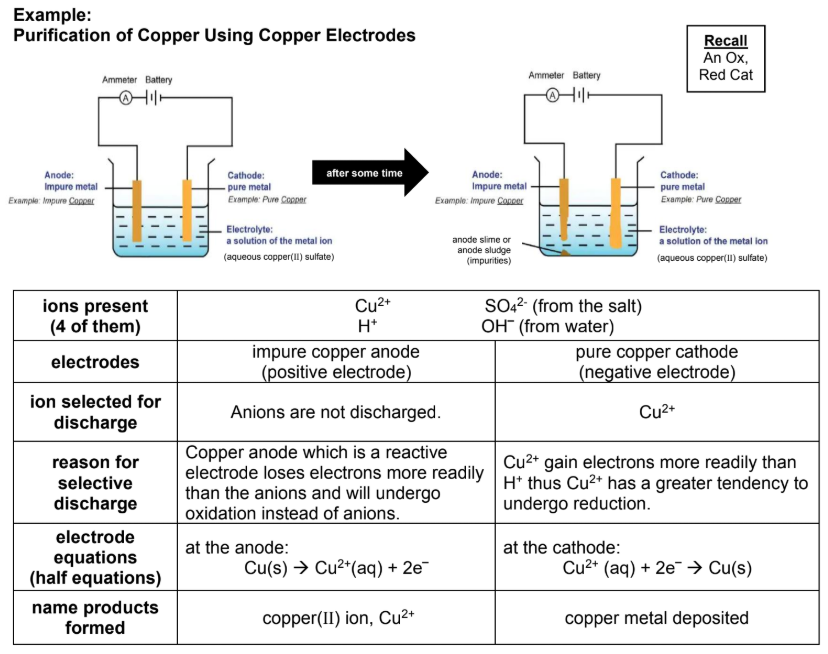
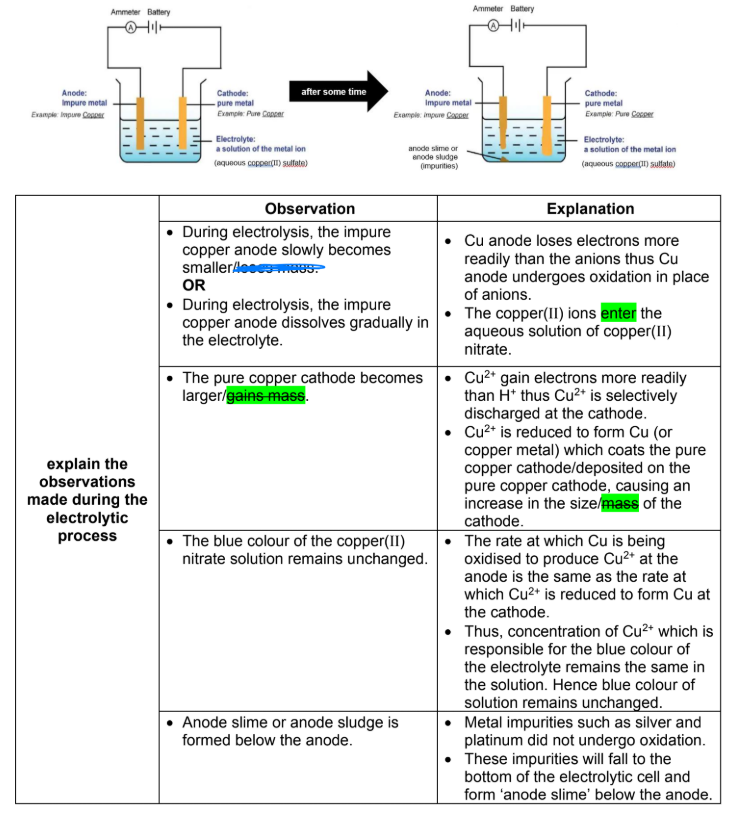
- Electroplating
- form a thin protective coating of metal on the surface of another which is likely to corrode.
- used to make metal look more attractive / protect it from corrosion. the plating metals are corrosion resistance and shiny. they are usually low in Reactivity Series Main Note
| Electroplating Metal | Uses |
|---|---|
| Zinc | dustbins, bucket |
| Chromium | water taps, car bumpers, bicycle handle bar |
| Tin | tin cans |
| Silver | silver plated cutlery, trophies |
| Gold | gold plated jewellery, watches |
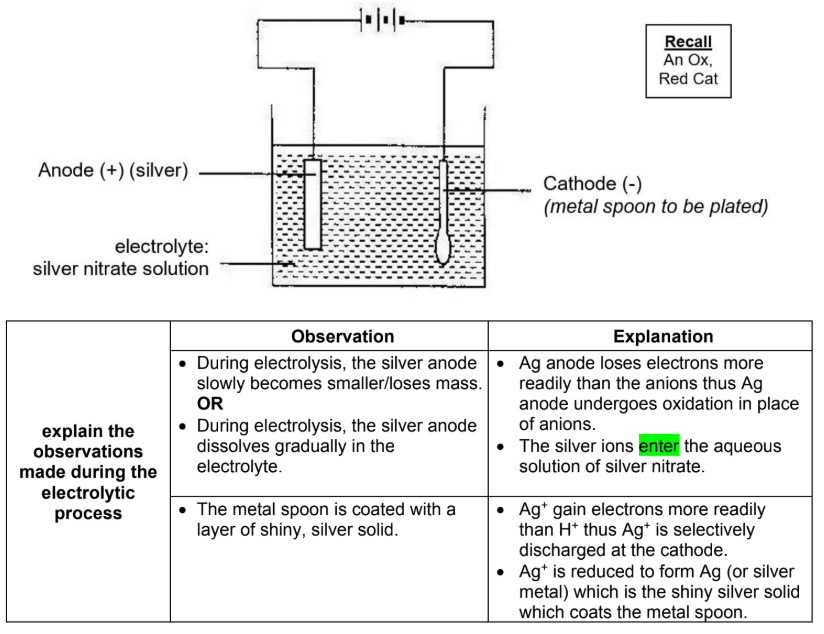
| ![[Pasted image 20250406145724.png | 350]] |
| Parts of Electrolytic Cell used for Electroplating: |
- battery
- connecting wires
- positive electrode (anode): the plating metal
- negative electrode (cathode): object to be plated
- electrolyte: aqueous solution containing the cations of the plating metal.
- e.g. aqueous solution of soluble salt of metal.
Note
- electrolyte must contain ions of plating metal
- e.g. in silver plating of objects, soluble silver salt solution e.g. silver nitrate solution/ aqueous silver nitrate should be used
- must include term “solution” or “aqueous” when giving examples of electrolytes as a solid silver sulfate cannot conduct electricity and hence process will not start
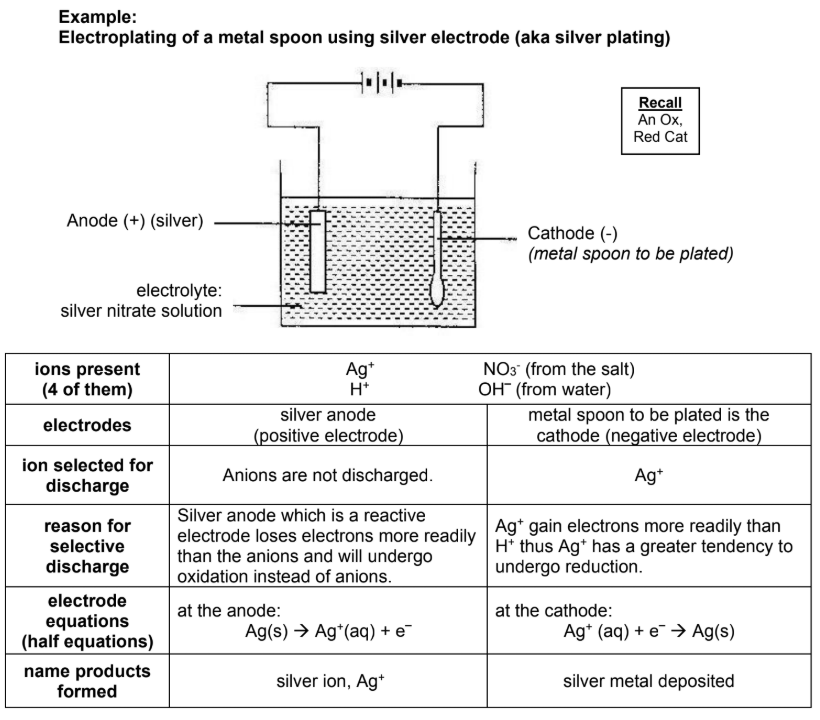
Note
Usually the same colour remains during electroplating as the concentration of cations in the solution remains same
Important
To complete circuit → object to be electroplated should be a good conductor of electricity. poor conductors of electricity → need to be coated with thin layer of graphite → before they can be electroplated
electrodes in all these cases must be good COEs!