Poly(ethene) → has very large molecular mass.
- there can be 1000s of carbon atoms in each poly(ethene) molecule
Addition Polymers
- when monomers join together without losing any molecules or atoms → polymer formed is called an addition polymer. this process called addition polymerisation
Definition
Addition polymerisation occurs when unsaturated monomers join together without losing any molecules or atoms to form addition polymers #ChemistryDefinitions
Monomer used for addition polymerisation is usually unsaturated.
- this means that it contains either carbon-carbon double bond or carbon-carbon triple bond.
- thus Alkenes can undergo addition polymerisation Chemical Properties of Alkenes
- at high pressure and temp. → 1000s of alkene molecules join together to form polymers
Note
- this is addition reaction
- carbon-carbon double bond in each monomer molecule will break to form new single bonds
- new single bonds join the monomers together to form the addition polymer
- unsaturated monomers have become saturated repeat units in the addition polymer
- monomers are any unsaturated organic compounds.
- Molecules of monomers must have at least 1 carbon carbon double bond
Naming Addition Polymer
- name always begins with ‘poly’ followed by the name of the monomer which forms it
Examples
Poly(ethene) Polyprepene Polychloroethene, Polyvinylchloride (PVC)
Deduce Structure of Polymer from Monomer
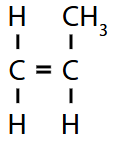
easier to deduce the structure of an addition polymer if the structural formula of its alkene monomer is written in following way:

for e.g. formula of propene can be written as:
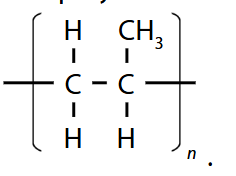
 the polymer formed, which is poly(propene) can then be represented as:
Deduce Structural Formula of a Monomer from its Polymer
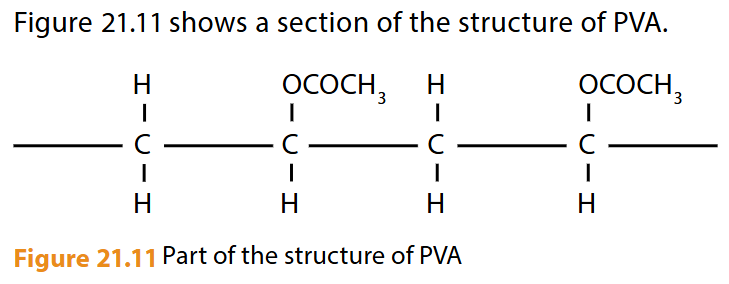 steps to deduce structural formula of monomer of PVA:
| Step | Example | |
|---|---|---|
| 1 | identify repeat unit in the polymer | 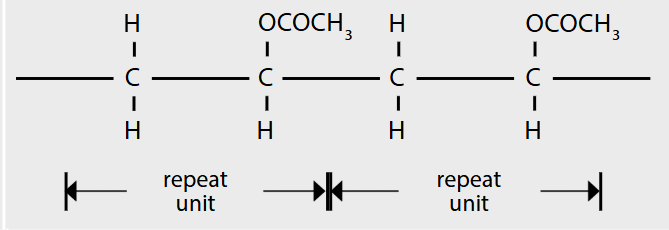 |
| 2 | draw structure of repeat unit | 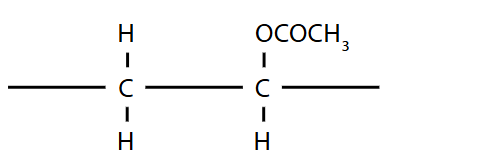 |
| 3 | convert carbon carbon single bond into a carbon carbon double bond | 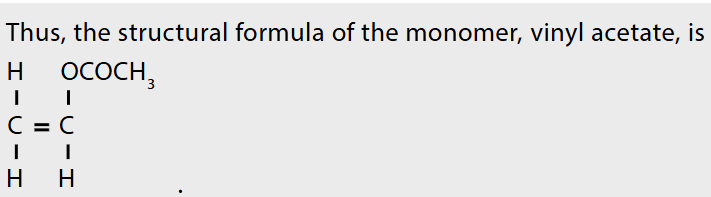 |
Uses of Poly(ethene) and some addition polymer
- type of plastic
- used for making items like plastic bags, toys, buckets, cling wraps
-
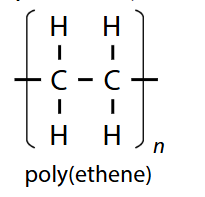
Poly(ethene) can be easily moulded into various shapes. thus can be used to make cling wraps, plastic bags, plastic toys
-
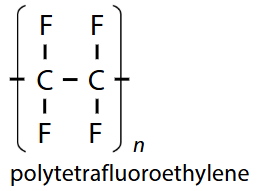
many frying pans are coated with a layer of polytetrafluoroethylene. it is heat resistant and has non stick properties
-
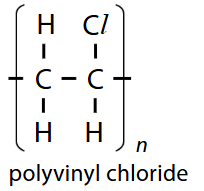
Polyvinyl chloride (PVC) is used to make thin gloves, pipes, raincoats and flooring mats.
-
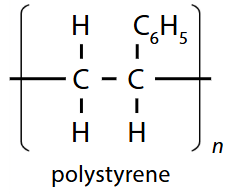
Polystyrene is hard, light, brittle. used to make disposable containers
Comparing Addition Polymer and its Monomer
Similarities between addition polymer and its monomer.
- empirical formula
- units
- types of atoms
- percentage of mass by atoms
Differences between addition polymer and monomer
- molecular size and mass
- density
- physical state
- melting and boiling points.
- test for unsaturated using aqueous bromine / bromine water / bromine solution Diff Between Saturated and Unsaturated Compounds
- unsaturated monomer decolourises reddish brown Aq bromine but Aq bromine remained reddish brown with saturated addition polymer.